
- All
- Product Name
- Product Keyword
- Product Model
- Product Summary
- Product Description
- Multi Field Search
Views: 0 Author: Site Editor Publish Time: 2026-11-17 Origin: Site


Are labeling errors slowing down your production line? Manual application inevitably leads to costly downtime. Cropped or wrinkled labels ruin brand trust in an instant. Integrating automated systems into a manufacturing line is a critical step for scaling efficiency. As output demands increase, manual application simply becomes unsustainable. It creates massive operational bottlenecks and placement variations. Choosing the correct equipment ensures every product leaving your facility meets strict quality standards. This guide helps production managers make informed decisions. We will examine technical specifications, operational requirements, and vendor reliability from an engineer's perspective.
Production Compatibility: Match the machine speed and physical footprint directly to your specific packaging workflow.
Versatility: Look for equipment handling different label sizes and geometric shapes to future-proof your investment.
Maintenance & Support: Prioritize suppliers offering long-term technical support and reliable local spare parts.
Investment Calculation: Balance upfront capital expenditure with long-term labor savings and continuous throughput.
Before evaluating specific equipment models, manufacturers must conduct a thorough line audit. Picture a busy factory floor. Seasonal spikes suddenly demand double the output. Purchasing a machine lacking capacity for future growth severely impacts operational efficiency. Conversely, over-investing wastes capital. Begin by determining your exact output volume. Calculate your required throughput in units per minute. As a rule of thumb on the factory floor, select a machine capable of operating at least 20 percent faster than your current maximum line speed. This buffer easily accommodates seasonal demand spikes without requiring immediate equipment upgrades.
Next, clearly identify the physical characteristics of your products. Geometry, weight, and surface texture dictate the mechanical configuration. Cylindrical items require wrap-around systems. Specifically, if you apply branding to the top of a pouch or rigid corrugated box, you will need a specialized Flat Surface Labeling Machine. These operate on entirely different mechanical principles than rotary systems.
Looking at current factory floors, there is a massive shift toward intelligent automation. Plant managers are actively combatting ongoing labor shortages. Modern labeling systems increasingly integrate vision inspection technologies. AI-driven cameras now detect misaligned labels in real-time. They instantly trigger reject gates without stopping the main conveyor. Furthermore, sustainability is forcing a change in packaging materials. Applicators must now handle thinner, eco-friendly label films. These sustainable materials stretch and tear easily under high web tension. Upgrading to a system with precise tension control ensures your line remains efficient as packaging standards evolve.
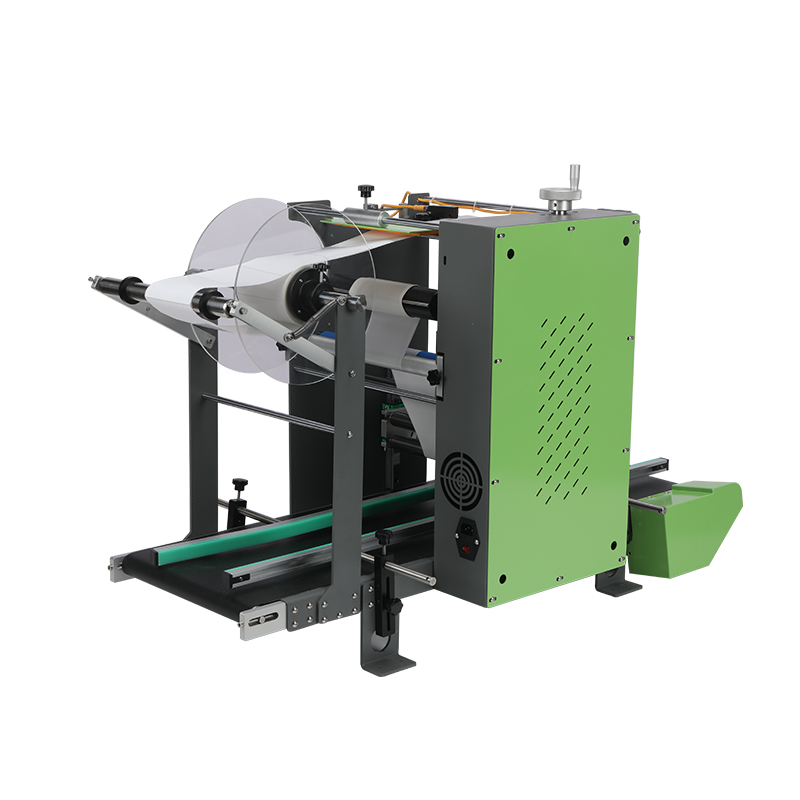
Technical specifications determine whether a machine will thrive or fail on your production line. Application speed must perfectly synchronize with your upstream filler or capper. If the labeler operates even slightly slower than the filler, it creates a severe production bottleneck. This completely negates the efficiency gains of automation. Speed heavily depends on the drive motor. Stepper motors are common in standard applications. They offer reliable performance for mid-speed lines. However, for high-speed requirements, servo motors are the absolute industry standard. Servo-driven systems provide superior torque control and smoother acceleration. They minimize web breaks and tension issues effortlessly.
Placement tolerance is another critical metric. A variance of plus or minus 2.0 millimeters might be acceptable for bulk agricultural jugs. In contrast, premium cosmetic and pharmaceutical packaging demands strict tolerances of plus or minus 0.5 millimeters. When reviewing specifications, look closely at the machine frame. A flimsy chassis will vibrate at high speeds, completely destroying your placement accuracy.
Modern equipment relies on advanced Programmable Logic Controllers paired with intuitive touch screens. These digital systems allow operators to store specific product parameters as recipes. This capability significantly reduces setup times during frequent product changeovers.
Technical Feature | Standard Requirement | High-Performance Requirement | Primary Benefit |
|---|---|---|---|
Drive Motor | Stepper Motor | Servo Motor | Servo motors offer higher speeds and tighter placement accuracy. |
Accuracy Tolerance | +/- 1.5mm to 2.0mm | +/- 0.5mm to 1.0mm | Essential for premium branding and strict pharmaceutical compliance. |
Control System | Basic Microcontroller | Advanced PLC with Touch Screen | Allows for recipe storage, reducing changeover times significantly. |
In today’s dynamic manufacturing environment, very few facilities dedicate a single line to just one product indefinitely. Consequently, mechanical flexibility is a non-negotiable attribute. The ability to perform tool-less changeovers offers a massive operational advantage. Picture an operator switching from a 500-milliliter beverage bottle to a large jug. Systems equipped with handwheels, scaled guide rails, and quick-release mechanisms allow rapid adjustments. Operators can tweak conveyor widths and sensor positions in minutes. They do not need to wait for specialized maintenance personnel.
Adjustability features are paramount for diverse container geometries. A highly flexible Automatic Labeling Machine offers multi-axis adjustments. For example, advanced series allow the dispensing head to be fully capable of vertical height, horizontal tilt, and lateral depth modifications. Tilt adjustments are particularly important for tapered containers. They ensure the label applies smoothly without wrinkling over unusual custom contours. Additionally, consider the roll capacity. Larger roll capacities mean fewer stops for roll changes. This directly increases your Overall Equipment Effectiveness.
The physical construction directly dictates lifespan and maintenance frequency. When evaluating an Industrial Label Applicator, scrutinize both frame materials and internal electronics. Industrial environments routinely expose machinery to dust, moisture, and vibrations. High-quality machines are constructed from heavy-duty 304 or 316 stainless steel and anodized aluminum. Stainless steel provides excellent resistance to rust. Anodized aluminum offers structural rigidity without excessive weight. Avoid machines relying heavily on painted carbon steel. These are highly prone to wear and contamination over time.
Beyond the rigid frame, the system must handle diverse label materials seamlessly. The type of label material dictates the sensor technology required. Standard photoelectric gap sensors work perfectly for opaque paper labels. They detect the difference in light transmission. However, if your packaging requires clear transparent labels on a clear liner, standard sensors will completely fail. In such cases, capacitive or ultrasonic sensors are strictly required. They accurately detect microscopic changes in web thickness.
Investing in capital equipment is not merely a transactional purchase. It marks the beginning of a long-term operational relationship. Evaluating your Industrial Labeling Equipment Supplier is just as crucial as assessing the mechanical design. Thoroughly investigate their industry track record and typical delivery lead times. Post-purchase communication is a critical indicator of vendor reliability. A reputable supplier maintains open lines for troubleshooting long after the initial installation.
Professional onsite installation and comprehensive operator training are absolutely vital. Even technologically advanced machinery will underperform if operators lack basic knowledge. They must know how to properly thread the label web and calibrate material sensors. Furthermore, verify the immediate availability of replacement spare parts. Wearing components like drive belts, rubber peel plates, and optical sensors eventually require replacement. Partnering with a supplier who maintains a robust distribution network prevents disastrous downtime. You do not want an orphan machine sitting idle while waiting for proprietary parts to clear international customs.
Procurement decisions are ultimately bound by capital expenditure budgets. Yet, focusing solely on the initial sticker price is a common and costly pitfall. A comprehensive financial analysis must account for all hidden expenses. When requesting an Industrial Labeling Machine Quote, ensure the documentation provides a highly detailed breakdown. A transparent quote itemizes the base machine cost separately from optional add-ons. These might include integrated thermal transfer date coders or upgraded servo motors. It must also clearly outline freight charges and installation fees.
Understanding the Total Cost of Ownership is essential for calculating a true Return on Investment. A slightly more expensive machine offering robust stainless-steel construction and precise servo-driven accuracy typically yields a faster return. It achieves this by drastically reducing daily labor costs and minimizing product rework. Always verify the warranty period included in the quote. Check whether it covers both parts and labor, and confirm the guaranteed response time for technical support.
Cost Category | Elements to Consider in Your Analysis |
|---|---|
Capital Expenditure | Base machine price, custom engineering, optional vision modules. |
Implementation | Freight, Factory Acceptance Testing, onsite installation, staff training. |
Operational Costs | Energy consumption, compressed air usage, permanent reduction in manual labor. |
Maintenance & Waste | Routine consumable parts, local technician availability, reduction in misapplied labels. |
Workplace protection and regulatory compliance cannot be compromised. Industrial machinery must adhere to strict safety standards to protect operators. Before finalizing a purchase, verify that the equipment meets recognized safety regulations like CE certification or UL listings. Emergency stop buttons must be highly visible and immediately halt all mechanical motion when engaged.
For manufacturers operating in the food or pharmaceutical sectors, compliance extends to strict hygiene standards. Equipment must be meticulously designed to eliminate hidden crevices where bacteria can accumulate. Evaluate the machine's Ingress Protection rating. A higher rating, such as IP65, indicates electrical enclosures are sealed against dust and withstand aggressive washdown procedures. The design should minimize flat horizontal surfaces where debris or liquids can pool.
Choosing an industrial labeling system represents a vital strategic investment in your manufacturing infrastructure. This equipment directly improves brand consistency, reduces material waste, and scales overall production speed. Navigating the complex market requires balancing technical capabilities with your specific operational realities. Always prioritize build quality, technical versatility, and vendor reliability over the lowest base price. Cheaper machinery often incurs significantly higher long-term operational costs. Review your specific facility requirements carefully. When you are ready to upgrade your production line, explore the proven automation solutions at ePackPak. Choosing the right partner ensures seamless integration, minimal downtime, and future-proof performance for your facility.
Semi-automatic machines require manual product loading and unloading by a human operator for every single cycle. This makes them suitable for low production volumes or specialized small batches. Conversely, automatic machines integrate directly into a motorized conveyor line. They detect products via optical sensors and apply labels continuously without manual intervention. This continuous operation is essential for high-speed manufacturing environments.
Standard entry-level machines are usually purpose-built for either round or flat surfaces exclusively. However, some advanced modular systems offer interchangeable dispensing heads and adjustable conveyor belts to handle both. It is highly critical to verify the specific configuration, mechanical limitations, and changeover times directly with the supplier before committing to a purchase.
Basic routine maintenance should be performed daily to prevent adhesive buildup and ensure accuracy. This includes cleaning the web path, wiping down rubber rollers with approved solvents, and calibrating material sensors. More comprehensive professional maintenance is typically recommended every 6 to 12 months. This involves drive belt replacements and motor inspections, depending heavily on daily operational hours.
Always request a highly detailed, itemized breakdown. This documentation should explicitly include the base machine cost, optional add-ons like thermal date coders, freight charges, installation fees, and operator training. It must also state the precise terms of the standard warranty period to avoid hidden financial surprises later.
Look for established manufacturing companies that provide transparent operational histories, proven case studies, and clear technical documentation. Reliable suppliers will have highly responsive customer support teams and readily available local spare parts inventories. They also show a strong willingness to run rigorous sample tests on your specific product containers before finalizing any commercial sale.
A high-quality, well-maintained machine built with a 304 stainless steel frame and premium servo motors can easily last 10 to 15 years. Lifespan heavily depends on the operating environment, adherence to daily cleaning protocols, and the frequency of professional preventative maintenance.
Wrap-around systems use a motorized belt to spin the container against a stationary backing pad. They are highly cost-effective for standard straight-sided cylinders at low to medium speeds. Rotary machines, however, use individual spinning turrets to hold containers firmly in place. They are absolutely essential for high-speed production, complex container shapes, or when extreme placement accuracy is required.


