
- All
- Product Name
- Product Keyword
- Product Model
- Product Summary
- Product Description
- Multi Field Search
Views: 0 Author: Site Editor Publish Time: 2026-11-09 Origin: Site


E-commerce fulfillment operations face conflicting mandates. You must accelerate throughput speeds and reduce dimensional weight. Simultaneously, you must eliminate single-use plastics to meet consumer and regulatory demands. Legacy plastic cushioning creates massive warehouse storage bloat and causes significant environmental friction. Many unproven eco-friendly alternatives risk higher damage rates and slower pack times. Transitioning to honeycomb packing paper requires a realistic evaluation. You need to understand its structural mechanics and assess its operational impact on packing stations. We will break down the exact implementation steps to replace bubble wrap without sacrificing line speed or product safety. Warehouse managers need practical methods to integrate paper-based void fill. We evaluate dispenser footprints, packer ergonomics, and drop-test performance. You will learn how to configure your pack stations for maximum efficiency while maintaining strict damage control standards.
The hexagonal cell expansion of honeycomb paper provides high-tension, interlocking protection that frequently eliminates the need for secondary adhesive tapes.
Integrating a honeycomb paper dispenser for packing stations requires initial workflow adjustments but typically yields long-term throughput gains and reduces packer fatigue.
While kraft honeycomb paper for protective packaging excels for light-to-medium weight items, heavy, large-format, or sharp-edged goods require hybrid packaging strategies, rigid honeycomb boards, or alternative void fill.
Unexpanded honeycomb paper reduces storage footprints by up to 80% compared to traditional plastic bubble rolls, directly improving warehouse space utilization and inbound freight costs.
Die-cut kraft paper relies on precise mechanical engineering. Tension transforms flat two-dimensional paper into a robust three-dimensional structure. The die-cut slits pull apart under tension from a dispenser. They open into a network of interlocking hexagons. This mimics the high strength-to-weight ratio found in a natural beehive. The vertical walls of these hexagonal cells provide significant crush resistance. They absorb impacts effectively during transit.
Shock absorption in paper structures differs fundamentally from plastics. Plastic bubble wrap relies on air retention. If a bubble punctures, it loses all protective value. Paper relies on structural rigidity. The expanded paper cells crush slightly upon impact. They absorb kinetic energy without entirely collapsing. This structural deformation protects the enclosed product.
Angled cells interlock tightly when wrapped around an object. The paper grips itself securely. You can entirely remove packing tape from the primary wrapping process. Packers simply tear the paper and press the ends together. The friction between the expanded cells holds the wrap in place. This eliminates a repetitive motion from the packing line.
Shock Absorption Mechanism | Plastic Bubble Wrap | Honeycomb Packing Paper |
|---|---|---|
Primary Defense | Trapped air pockets | Rigid vertical cell walls |
Failure Mode | Puncture causes total loss of protection | Cell crushing absorbs energy gradually |
Closure Method | Requires adhesive tape | Self-interlocking friction |
Conformability | Bulky, leaves voids in corners | Wraps tightly around complex shapes |
You must define acceptable baseline metrics for transit damage rates. Implement standardized drop-test protocols. Test your most fragile SKUs using ISTA (International Safe Transit Association) standards. Drop packages from varying heights onto concrete. Evaluate the product condition. Compare these results directly against your historical plastic cushioning data. Acceptable damage rates should remain flat or decrease.
To establish a reliable baseline, execute the following drop-test protocol:
Pack five identical fragile SKUs using your legacy plastic bubble wrap.
Pack five identical fragile SKUs using the new honeycomb paper.
Drop each package from a height of 36 inches onto a concrete floor. Target the flat base, the longest edge, and the most vulnerable corner.
Open the cartons and inspect the products for micro-fractures, surface scratches, or total failure.
Record the damage rates and compare the structural integrity of the crushed paper cells versus the popped plastic bubbles.
Evaluate the unboxing experience carefully. You must balance a premium tactile feel with high-volume fulfillment realities. Customers appreciate plastic-free packaging. However, the presentation must remain neat. Over-wrapping creates a messy unboxing experience. Under-wrapping risks product damage. Train packers to use the precise amount of material required.
Establish strict sustainability compliance benchmarks. Ensure the material offers genuine curbside recyclability. Verify FSC (Forest Stewardship Council) certification for all paper products. This substantiates your marketing efforts. Consumers increasingly scrutinize environmental claims. Authentic, certified materials protect your brand reputation.
Continuous rolls serve operations with highly variable box sizes perfectly. They accommodate unpredictable SKU dimensions effortlessly. A packer can dispense ten inches or ten feet of material instantly. The continuous format prevents material waste. You pull exactly what you need. A honeycomb packing paper roll adapts to any product shape on the fly.
Evaluate pre-cut sheets for standardized kitting operations. Single-SKU fulfillment lines benefit from uniform sheet sizes. Kitting operations often involve assembling multiple small components into a single master carton. In these environments, pre-cut sheets shine. You can stack hundreds of flat sheets directly on the pack table. The packer does not need to interact with a dispenser at all. They simply grab a sheet, wrap the component, and place it in the box. However, you must calculate the exact dimensions required for your largest component. If a sheet is too small, the packer will use two sheets, instantly destroying your material efficiency metrics.
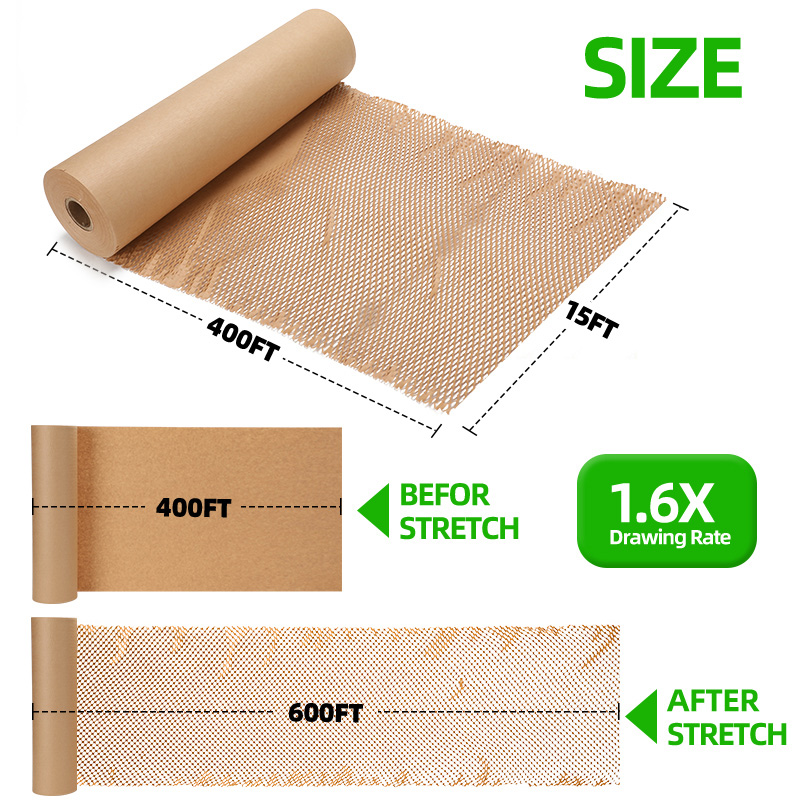
Compare storage density metrics rigorously. Unexpanded rolls offer massive space savings. A single pallet of flat die-cut paper yields the equivalent volume of multiple pallets of bubble wrap. The paper expands by a ratio of roughly 1:1.6 upon dispensing. You store dense, flat material. You generate volume only at the packing station. This improves warehouse space utilization dramatically.
Cylindrical and fragile items require specialized handling. Wine bottles, cosmetics, and glassware present unique challenges. A honeycomb paper sleeve for glass packaging offers a targeted solution. These pre-formed sleeves slide directly over the product. They eliminate manual wrapping entirely. The sleeve conforms tightly to the bottle shape.
The sleeve operates on a simple expansion principle. It ships flat. When the packer pushes a bottle through the center, the sleeve expands outward, gripping the glass tightly. The friction prevents the bottle from sliding out during transit. You do not need to fold the ends or tape the top. The sleeve simply hugs the cylinder. This makes it ideal for subscription box companies shipping hot sauces, craft beers, or essential oils. The uniform appearance of the sleeves also creates a highly organized, professional look when the customer opens the box.
Evaluate the operational speed of sleeves. Slipping a sleeve over a bottle takes two seconds. Manual wrapping takes ten to fifteen seconds. High-volume beverage shippers recover massive labor hours using sleeves. The consistent application also ensures uniform protection. Every bottle receives the exact same cushioning thickness.
Acknowledge the limitations of sleeves. They fail on irregularly shaped fragile items. Teapots or complex ceramics require flexible wrapping. Sleeves only work for uniform cylinders. Compare them to traditional foam nets. Foam nets stretch further but utilize petroleum-based plastics. Paper sleeves offer similar speed with superior environmental credentials.
Rigid honeycomb paper boards serve as sturdy box alternatives. They replace traditional corrugated cardboard for high-value shipments. The thick honeycomb core provides immense structural integrity. These boards resist bending and crushing. They protect expensive electronics or industrial components effectively.
Corrugated cardboard relies on fluting for strength. Honeycomb boards rely on vertical cell walls. This gives honeycomb boards a significantly higher Edge Crush Test (ECT) rating compared to standard corrugated pads of the same thickness. When shipping a heavy oak table, you place rigid honeycomb blocks at the four corners of the carton. If the carton drops on a corner, the honeycomb block absorbs the kinetic energy. It crushes slightly, but it prevents the impact from reaching the wood. You cannot achieve this level of structural protection with flexible wrapping paper.
Assess heavy-duty applications for large-format goods. Furniture shippers utilize thick honeycomb pads. These pads bridge the gap between flexible wrapping and rigid void fill. They protect corners and edges during heavy freight transit. You cut the boards to size. You place them strategically inside the master carton. They absorb massive impacts that would destroy flexible paper wrap.
Compare white wrap against natural kraft options. White paper provides a premium, clinical unboxing experience. Luxury brands often prefer bleached paper. Natural kraft honeycomb paper for protective packaging signals standard eco-branding. It looks raw and recycled. Consumers instantly recognize the brown kraft color as environmentally friendly.
Analyze customizable packaging solutions. You can incorporate brand colors. Custom-printed tissue interleaf elevates the unboxing experience. Small businesses and boutique sellers use colored tissue to stand out. The tissue layer sits between the product and the rough honeycomb paper. It adds a pop of color while preventing surface scratches.
Evaluate supply chain availability differences. Natural kraft paper remains abundant. Bleached white paper requires different processing. Custom-dyed options require minimum order quantities. They also extend lead times. Factor these constraints into your procurement strategy. Ensure your chosen aesthetic does not disrupt fulfillment continuity.
Define your throughput thresholds clearly. Identify the daily package volume that justifies equipment upgrades. Low-volume stations operate fine with manual tensioners. The packer pulls the paper physically to expand the cells. High-volume lines require automation. Once a packer exceeds 200 packages per shift, manual pulling causes fatigue. You must upgrade to an electric honeycomb paper dispenser to maintain speed.
Dispenser Feature | Manual Dispenser | Electric Dispenser |
|---|---|---|
Throughput Capacity | Under 200 packages per shift | Over 200 packages per shift |
Power Requirement | None | Standard 110V/220V outlet |
Packer Fatigue | Moderate (requires physical pulling) | Low (motorized dispensing) |
Maintenance Needs | Minimal (occasional tension adjustment) | Moderate (sensor cleaning, belt checks) |
Footprint | Compact, easily movable | Fixed, requires dedicated station space |
Evaluate footprint and ergonomics carefully. Space remains tight on fulfillment lines. You must mount a honeycomb paper dispenser for packing stations without disrupting existing workflows. Avoid blocking conveyor setups. Keep scale placements clear. Ensure monitor arms can still swing freely. Mount the dispenser at chest height. This prevents packers from bending or reaching awkwardly.
Analyze maintenance requirements and power constraints. Legacy warehouses often lack sufficient power drops at individual pack stations. Electric dispensers require standard 110V or 220V outlets. Plan your electrical routing before purchasing equipment. Manual dispensers require zero power. They also require almost zero maintenance. Electric units need occasional belt replacements and sensor cleaning.
Address the primary learning curve immediately. Packers often over-stretch the paper initially. This tears the web and ruins the wrap. Conversely, under-stretching fails to open the hexagonal cells. Under-stretched paper provides zero protective volume. You must train staff to find the optimal tension sweet spot.
Implement this standard operating procedure for manual wrapping:
Pull the paper from the dispenser using both hands to ensure even tension across the web.
Stretch the paper until the hexagonal cells open fully, locking into a 3D structure.
Place the product on the expanded paper at a 45-degree angle to maximize corner protection.
Roll the product forward, keeping the paper taut so the cells interlock tightly.
Twist the paper sharply downward to tear it from the roll, then press the torn edge flat against the wrapped item to seal it without tape.
Discuss the necessity of soft tissue interleaf paper. The expanded kraft paper has rough edges. It can scratch highly polished items. Acrylics, gloss plastics, and jewelry require a barrier. The dispenser feeds a layer of soft tissue simultaneously with the honeycomb paper. The tissue touches the product. The honeycomb provides the outer armor.
Identify where honeycomb wrapping paper for ecommerce shipping excels. It dominates in apparel, cosmetics, and home goods. Light electronics ship safely in paper. These items lack the mass to crush the paper cells during transit. The paper provides excellent scuff protection and moderate shock absorption.
Identify critical failure points. Heavy industrial parts destroy flexible paper. Dense items over ten pounds crush the hexagonal cells flat. Products with sharp protruding edges pierce the paper matrix. Consider a fulfillment center shipping automotive parts. A solid steel brake rotor weighs fifteen pounds and features sharp, machined edges. If you wrap this rotor in honeycomb paper, the weight will instantly flatten the expanded cells. The sharp edges will slice through the kraft paper during the first transit vibration. The product will arrive damaged, and the packaging will look shredded. You must train your packers to recognize these limitations. Implement strict routing rules in your Warehouse Management System. Flag heavy or sharp SKUs to bypass the paper wrapping stations and route them to heavy-duty packaging lines.
Implement hybrid packaging approaches. Use honeycomb paper for surface protection. Combine it with corrugated inserts for structural void fill. Wrap a heavy vase in paper to prevent scratches. Then, suspend the wrapped vase inside the box using rigid cardboard inserts. This hybrid method leverages the strengths of multiple materials.
Calculate inbound freight and storage space savings. Flat-pack rolls reduce inbound shipping volume. You ship dense paper, not empty air. You unload fewer trucks. You dedicate less warehouse racking to packaging materials. A standard warehouse pallet rack holds approximately twenty rolls of traditional bubble wrap. That same pallet rack can hold over one hundred rolls of flat-packed honeycomb paper. This massive discrepancy in storage density completely changes how you manage packaging inventory. You reduce the frequency of material replenishment runs. Forklift drivers spend less time moving bulky packaging materials and more time moving actual product. You also free up valuable dock doors, as inbound packaging shipments arrive less frequently.
Factor in the reduction of dimensional weight (DIM) charges. Bubble wrap adds significant bulk to a product. It forces you into larger outer cartons. Honeycomb paper conforms tightly to the item. It adds minimal bulk. This allows you to use smaller boxes. Smaller boxes reduce DIM weight charges from carriers. Shipping a smaller box saves substantial freight space.
Analyze the physical footprint at the pack station. A standard bubble wrap roll consumes massive overhead space. It requires large overhead hoppers or bulky floor stands. A paper dispenser sits compactly on the back of the pack table. This opens up sightlines across the warehouse floor. It creates a cleaner, more organized packing environment.
Examine the realities of curbside recyclability. End-consumers dictate packaging success. Paper goes directly into the home recycling bin. It requires zero extra effort. Plastic films require store-drop-off recycling. Consumers rarely execute this step. Most bubble wrap ends up in landfills. Offering a completely plastic-free unboxing experience builds massive brand loyalty.
Highlight the importance of verifying sourcing. Demand FSC certification from your suppliers. This ensures the paper originates from responsibly managed forests. It prevents your supply chain from contributing to deforestation. Document this certification. Display it on your website. Transparency builds trust with eco-conscious buyers.
Address the disposal of the tissue interleaf layer. Ensure the tissue is also fully recyclable. Avoid wax-coated or plastic-lined tissues. The entire packaging solution must remain 100% recyclable. If a consumer has to separate plastic from paper, the system fails. Keep the material stream pure.
Audit your current packaging material volume and identify your top five most fragile SKUs.
Conduct a standardized drop-test pilot using these specific items wrapped in honeycomb paper to establish baseline damage metrics.
Install a single manual dispenser on one high-volume packing station to measure the direct impact on average pack time.
Measure the outer carton size required for paper-wrapped items versus your legacy plastic cushioning to calculate physical space savings.
A: Honeycomb paper excels for items under ten pounds. Products exceeding this weight can crush the expanded hexagonal cells during transit, nullifying the shock absorption. For heavier items, you must use hybrid packaging, combining the paper wrap with rigid corrugated inserts or heavy-duty honeycomb boards for structural support.
A: Yes. The paper remains flat on the roll. A dispenser applies the precise mechanical tension needed to pull the die-cut slits open into a 3D hexagonal structure. Without a dispenser, packers cannot achieve the consistent expansion required for adequate cushioning and interlocking.
A: Paper sleeves offer comparable application speed to foam nets but provide superior environmental benefits. Sleeves slide over bottles instantly and are fully curbside recyclable. Foam nets stretch more easily over irregular shapes but rely on petroleum-based plastics that complicate end-user disposal and recycling efforts.
A: Yes. Customers can easily reuse the paper for personal shipping or moving fragile household items. Because the paper interlocks without adhesive tape, it remains largely intact after unboxing. If not reused, it breaks down easily in standard curbside paper recycling streams.
A: Standard kraft paper can generate minor paper dust during the tearing process. It also has a slightly rough texture. To prevent dust accumulation or micro-scratches on highly polished surfaces like acrylic or jewelry, operations use a soft tissue interleaf layer dispensed simultaneously with the honeycomb wrap.
A: Unexpanded paper rolls can reduce storage footprints by up to 80%. Because the paper is stored flat and only expands into a 3D structure at the packing station, a single pallet of paper yields the protective volume of roughly five to six pallets of traditional plastic bubble wrap.


