
- All
- Product Name
- Product Keyword
- Product Model
- Product Summary
- Product Description
- Multi Field Search
Views: 0 Author: Site Editor Publish Time: 2026-11-13 Origin: Site


Does your heart sink when a perfect design ends up crooked or bubbly on the glass? Imagine pouring hours into crafting the perfect artisan product, only to ruin the final retail presentation with a skewed sticker. Hand-labeling frequently feels like a constant, frustrating battle against physics. You deserve a professional, flawless finish that accurately reflects the high quality of what is inside the jar. In this comprehensive guide, we will solve your packaging frustrations once and for all. You will learn actionable manual tricks for small batches, uncover the hidden financial drains of doing it by hand, and discover how upgrading to automated equipment can permanently transform your production line.
Manual application often seems like a savvy, cost-saving measure for startups and boutique brands. In reality, it quickly morphs into the most severe bottleneck in your facility. As your brand scales, the sheer volume of time squandered on repetitive, meticulous tasks severely impacts your bottom line. Crooked labels act as an immediate visual red flag to consumers. Picture a retail buyer examining your artisan salsa jar; if the branding is slanted, they may subconsciously question the safety, hygiene, and consistency of the food inside. While a rustic, small-batch aesthetic certainly has its charm, unwavering visual consistency is the true hallmark of a premium brand. Shoppers view symmetry as a direct proxy for rigorous quality control. Applying a flat, adhesive-backed substrate to a curved, cylindrical surface poses a complex geometric challenge. Bubbles inevitably materialize because ambient air becomes trapped between the paper and the glass. Since human finger pressure is rarely uniform, tension variances as the sticker wraps around the curve lead to stubborn creases. Once the industrial glue sets, these wrinkles are virtually impossible to smooth out without tearing the material. Beyond aesthetics, the financial leaks include the literal value of your labor and the price of ruined materials. Specifically, if an employee spends 30 seconds per unit and discards 5% of the inventory due to poor alignment, your true cost per unit skyrockets. This operational inefficiency establishes a hard ceiling on your daily output, actively preventing you from fulfilling larger, more lucrative wholesale orders.
For entrepreneurs just getting off the ground, manual techniques remain a necessary stepping stone. By employing a few strategic methods, you can minimize frustrating errors until your daily volume justifies mechanical automation. Surface preparation is absolutely non-negotiable. Even microscopic dust particles or invisible oil residues from your fingertips will compromise the adhesive bond over time. Vigorously wipe your containers with high-grade isopropyl alcohol and guarantee they are bone-dry before peeling your first sticker. Avoid the temptation to free-hand your placement, as fatigue will quickly ruin your accuracy. Instead, construct a rudimentary jig—such as a wooden cradling block or a modified cardboard egg carton—to cradle the glass securely. Alternatively, lay down two thick strips of masking tape on your workbench to create a visual track, ensuring each unit sits at the exact same orientation every single time. Never initiate contact from one edge and drag across the curve. In contrast, you should carefully align the exact horizontal center of the sticker and press it firmly against the glass. Using both thumbs, apply heavy outward pressure, moving steadily toward the left and right margins simultaneously. This specific motion forces trapped air out through the open sides rather than locking it into a center bubble.
Recent market analyses highlight a transformative phase in the packaging sector. As e-commerce and boutique retail expand rapidly, consumer expectations for premium, flawless presentation have surged to all-time highs. Industry data shows that small to medium-sized enterprises are rapidly abandoning manual workflows in favor of localized automation. Investing in mechanized application is no longer an exclusive luxury reserved for massive multinational corporations; it has emerged as a critical baseline for emerging brands aiming to maintain supply chain resilience, reduce labor overhead, and secure retail shelf space in a highly competitive landscape.
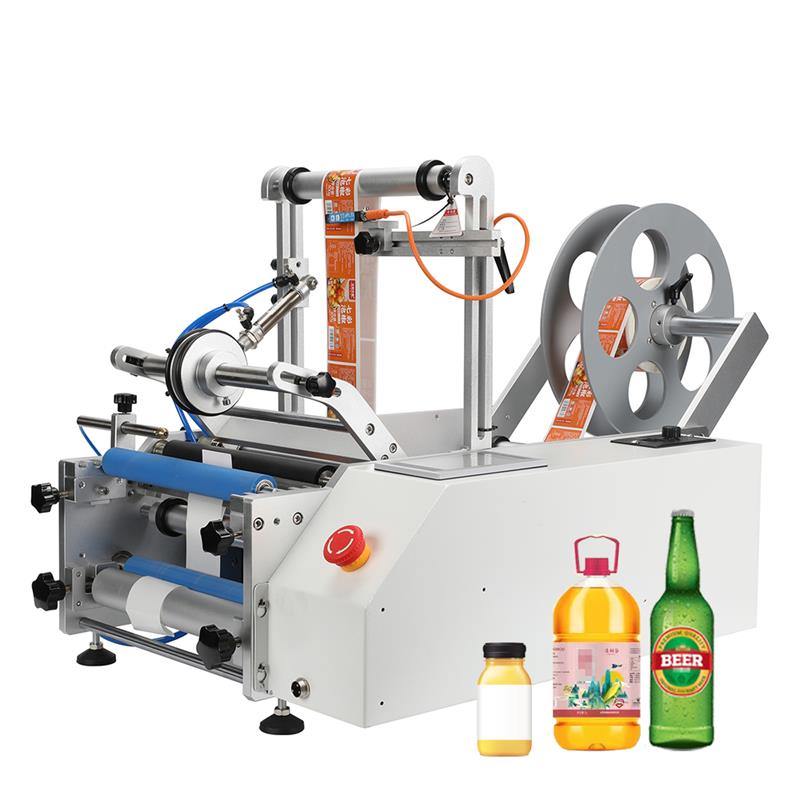
Once your daily output consistently exceeds a hundred units, relying on human hands becomes a tangible risk to your business growth. Transitioning to professional equipment delivers a dramatic, measurable spike in both output velocity and visual quality. A Bottle Label Applicator is a highly calibrated mechanical device engineered to manage material tension and precise placement. By gripping the container securely and utilizing synchronized motorized rollers, it guarantees that every single piece of branding is rolled on with identical, heavy pressure, entirely eliminating human variability. Speed increases exponentially, allowing a single operator to process dozens of units per minute rather than struggling with a few. Accuracy reaches near-perfection, eliminating the human fatigue that causes skewing late in a shift. As a result, you achieve zero waste, protecting your capital investment in expensive, custom-printed foil rolls.
Selecting the appropriate machinery heavily depends on your current order volume, facility footprint, and realistic growth projections over the next few years. For businesses seeking a massive efficiency boost without the spatial footprint of a large conveyor system, a Semi Automatic Labeling Machine serves as the ultimate entry-level powerhouse. The workflow is incredibly simple: an operator drops the vial into the carriage and taps a foot pedal, while the mechanism flawlessly handles the rotation and smoothing in a fraction of a second. Conversely, if you manage a continuous, high-velocity production line—particularly in the beverage, nutraceutical, or cosmetics sectors—an inline automatic architecture is mandatory. A dedicated Round Bottle Labeling Machine integrates directly into existing conveyor belts, facilitating hands-off, ultra-fast throughput that easily keeps pace with automated liquid filling stations.
Feature | Manual Application | Semi-Auto Machine | Fully Auto Machine |
|---|---|---|---|
Speed | Low (2-4 units/min) | High (15-30 units/min) | Ultra-High (50+ units/min) |
Consistency | Variable | High | Perfect |
Operator Fatigue | High | Minimal | None |
Committing capital to industrial hardware requires a careful evaluation of technical specifications to ensure long-term versatility. Your chosen unit must effortlessly adapt to varying dimensions. Whether you are processing slender essential oil dropper vials or wide-mouth salsa jars, adjustable roller mechanisms are critical for ensuring the substrate seats perfectly against the specific curve of the glass without wrinkling. In addition, verify that the integrated photoelectric sensors can accurately detect the minute gaps between individual stickers. Advanced sensors easily differentiate between clear transparent plastics, reflective metallic foils, and standard matte paper. This sensory precision is the dividing line between a workflow that constantly jams and one that hums along smoothly. Ultimately, every facility has unique spatial and operational constraints. We highly recommend browsing a comprehensive Bottle Labeling Machine catalog to compare compact tabletop models against free-standing industrial units, ensuring you find the exact mechanical match for your floor plan.
Even the most advanced hardware performs only as well as the operator configuring it. Mastering a few setup details ensures pristine, repeatable results. Always communicate the required unwind direction to your printing partner before ordering. If the factory winds the spools backward, the mechanics cannot feed them properly into the applicator. Furthermore, proactively select industrial adhesives rated specifically for your product's ultimate environment, such as condensation-resistant glues for refrigerated beverages. Take the necessary time to rigorously calibrate the tension clutches. Excessive tension stretches and distorts the graphics, whereas insufficient tension causes the paper to drift off-center. Always run a small test batch of empty, clean glassware to dial in the exact parameters before risking your branded inventory.
Procuring industrial hardware is a long-term operational marriage, not a fleeting, one-time transaction. The ongoing quality of your support network dictates the lifespan and reliability of your investment. An exceptional Labeling Machine Supplier operates as a dedicated growth partner. Prioritize vendors who supply comprehensive video tutorials, highly responsive remote troubleshooting, and a readily accessible inventory of spare parts. A reputable manufacturer will aggressively stand behind the durability of their engineering. Collaborate exclusively with teams who deeply understand the complex nuances of container geometry and material science to drastically minimize future downtime.
Most modern units feature highly adjustable rollers and peeling plates that can accommodate a wide range of diameters, from tiny tinctures to large food jars. The operator simply adjusts the mechanical settings between different product batches.
The operator manually places the cylindrical container onto the carriage rollers and triggers the system via a foot pedal or hand lever. The motorized rollers then spin the glass while dispensing the sticker, smoothing it evenly across the surface in under two seconds.
Bubbling is almost always caused by uneven human tension during application, which traps microscopic air pockets under the center of the paper. A mechanized applicator solves this entirely by applying uniform, heavy pressure across the entire surface simultaneously as it rotates.
For startups and small-to-medium enterprises, a tabletop semi-automatic model is universally the most cost-effective choice. It requires minimal bench space, is highly affordable, and dramatically increases production speed and accuracy compared to doing it entirely by hand.
While the upfront investment for a machine is higher, the cost per unit decreases significantly over time due to labor savings, higher output, and the elimination of material waste from misaligned labels.
Modern labeling equipment is designed for industrial simplicity. With regular cleaning of the rollers and sensor calibration, these machines can operate for years with minimal intervention or specialized maintenance.


