
- All
- Product Name
- Product Keyword
- Product Model
- Product Summary
- Product Description
- Multi Field Search
Views: 0 Author: Site Editor Publish Time: 2026-11-02 Origin: Site


Global jurisdictions are accelerating the phase-out of Expanded Polystyrene (EPS) foams across the packaging industry. Consumers expect zero-waste unboxing experiences, pushing fulfillment centers to rethink void fill strategies. Transitioning to sustainable alternatives introduces immediate operational risks. Procurement and fulfillment teams must balance eco-friendly mandates with the physical reality that starch-based materials behave differently under stress, humidity, and weight compared to traditional plastics. We built this technical framework for evaluating, sourcing, and implementing biodegradable packing peanuts at scale. Understanding the chemical properties and physical limitations of these materials helps you ensure rigorous product protection. You can maintain warehouse fulfillment efficiency and shipping integrity by adjusting your packing protocols to match the specific behavior of starch foams.
Material Vulnerability: Starch-based peanuts are inherently hydrophilic; strict moisture control during storage and transit is non-negotiable to prevent material collapse and residue transfer.
Weight Constraints: Biodegradable options compress more easily under heavy loads than EPS, requiring careful density evaluation and potential hybrid packaging strategies for items over 15 lbs.
Supplier Verification: Sourcing from a reliable corn based packing peanuts supplier requires verifying compostability certifications (e.g., ASTM D6400) to avoid greenwashed plastics.
Modern sustainable void fill relies on a completely different chemical architecture than petroleum-based plastics. Manufacturers produce these peanuts by extruding natural starches—typically derived from corn or sorghum—under high heat and pressure. Water introduced during the extrusion process flashes into steam, puffing the starch into a cellular foam structure. Unlike EPS, which relies on synthetic polymers and blowing agents, starch-based foams consist entirely of organic carbohydrates. This organic makeup provides excellent cushioning for lightweight items but fundamentally alters how the material responds to environmental factors. Warehouse teams used to handling indestructible plastic must adjust their handling procedures. Starch foams require gentler conveying and strict environmental controls to maintain their structural integrity before they ever reach the shipping carton.
The standard water solubility test quickly differentiates starch from EPS. When submerged in warm water, starch peanuts dissolve into a milky liquid within minutes, while EPS floats indefinitely. Warehouse managers should view this as a strict indicator of material vulnerability. The feature that allows the material to wash away safely makes it highly susceptible to unexpected transit leaks, high warehouse humidity, or condensation inside shipping trailers. If a trailer sits in a humid yard over the weekend, the ambient moisture can degrade the top layer of void fill inside the cartons. Understanding this hydrophilic nature dictates how you redesign your packaging protocols. You must account for the entire journey, from your storage racks to the customer's porch, ensuring the material stays dry.
Structural memory defines how well a packaging material absorbs repeated shocks during transit. When evaluating corn starch packing peanuts bulk supplies, you will notice they exhibit less bounce back than traditional EPS. Polystyrene acts like a microscopic spring, compressing upon impact and returning to its original shape. Starch foams absorb energy through cellular crushing. Once compressed by a heavy impact, they stay compressed. This lack of memory impacts long-haul transit, where constant road vibration causes the void fill to settle. Settling creates empty space at the top of the carton, leaving the product vulnerable to subsequent drops. Packers must overfill cartons slightly to account for this settling, applying a slight crown before taping the flaps shut.
Performance Metric | Expanded Polystyrene (EPS) | Starch-Based Peanuts |
|---|---|---|
Material Memory | High (springs back after impact) | Low (crushes to absorb impact) |
Moisture Resistance | Excellent (waterproof) | Poor (dissolves or melts) |
Static Properties | Highly static (clings to products) | Naturally anti-static |
Vibration Settling | Minimal | Moderate to High |
Dust Generation | Low | Moderate (requires hopper maintenance) |
The most common failure point when switching to sustainable void fill is applying it to items that exceed the material's structural capacity. Heavy items crush starch peanuts under their own weight during standard transit vibrations. This crushing creates void space, allowing the product to migrate toward the edges of the carton where impact forces are highest. Fulfillment teams must establish strict weight-to-volume ratios. Generally, compostable void fill peanuts excel at protecting items under 15 pounds. For heavier shipments, engineers should implement hybrid packaging strategies. You can utilize corrugated inserts or molded pulp to bear the primary weight, reserving the peanuts strictly for lightweight void filling around the edges. Testing different configurations on a vibration table helps pinpoint the exact failure threshold for your specific product lines.
Before rolling out starch-based peanuts across your entire fulfillment operation, you must validate their performance through rigorous drop testing. Relying on visual inspections is insufficient. You need empirical data to confirm the material can withstand the specific shock profiles of your parcel carriers. Follow a standardized testing framework to ensure accurate results.
Pack a test carton using your heaviest standard product, ensuring a minimum of two inches of starch peanuts on all six sides.
Seal the carton using your standard water-activated tape or pressure-sensitive adhesive.
Drop the carton from a height of 36 inches onto a concrete floor, targeting the most vulnerable corners first.
Repeat the drop test on all flat faces and edges to simulate a severe transit journey.
Open the carton and measure the amount of settling or crushing that occurred within the void fill layer.
Inspect the product for any signs of impact damage or residue transfer.
If the peanuts compress by more than twenty percent during this test, you must either increase the density of the fill or switch to a hybrid packaging model for that specific product weight.
Storing these materials in non-climate-controlled environments introduces severe operational hazards. Because starch is hygroscopic, it actively absorbs moisture from the air. In humid warehouses, the peanuts shrink, lose their cushioning properties, and stick together in the hoppers. Transit condensation presents another unique risk. When a package moves from a freezing cargo plane to a warm delivery truck, condensation forms inside the box. This ambient moisture causes the peanuts to melt slightly against the product. Customers often report an unexplained wetness or a sticky residue on their items, even when the outer corrugated box appears perfectly dry. Inner poly-bagging of sensitive products blocks this residue transfer. You should mandate secondary bagging for any item with a high-gloss finish or exposed electronic ports.
Despite their moisture vulnerabilities, starch-based foams offer a massive operational advantage: they are naturally anti-static. EPS peanuts generate static electricity, causing them to cling stubbornly to clothing, products, and warehouse equipment. This static charge can fatally damage sensitive electronic components like circuit boards and unshielded hardware. Starch peanuts dissipate static charges naturally without requiring additional chemical coatings. This makes them a superior, safer choice for electronics fulfillment operations. Packers spend less time brushing clinging peanuts off their workstations, and customers enjoy a cleaner unboxing experience. You can eliminate the need for specialized anti-static sprays or grounded wrist straps at the packing stations when using starch-based fill.
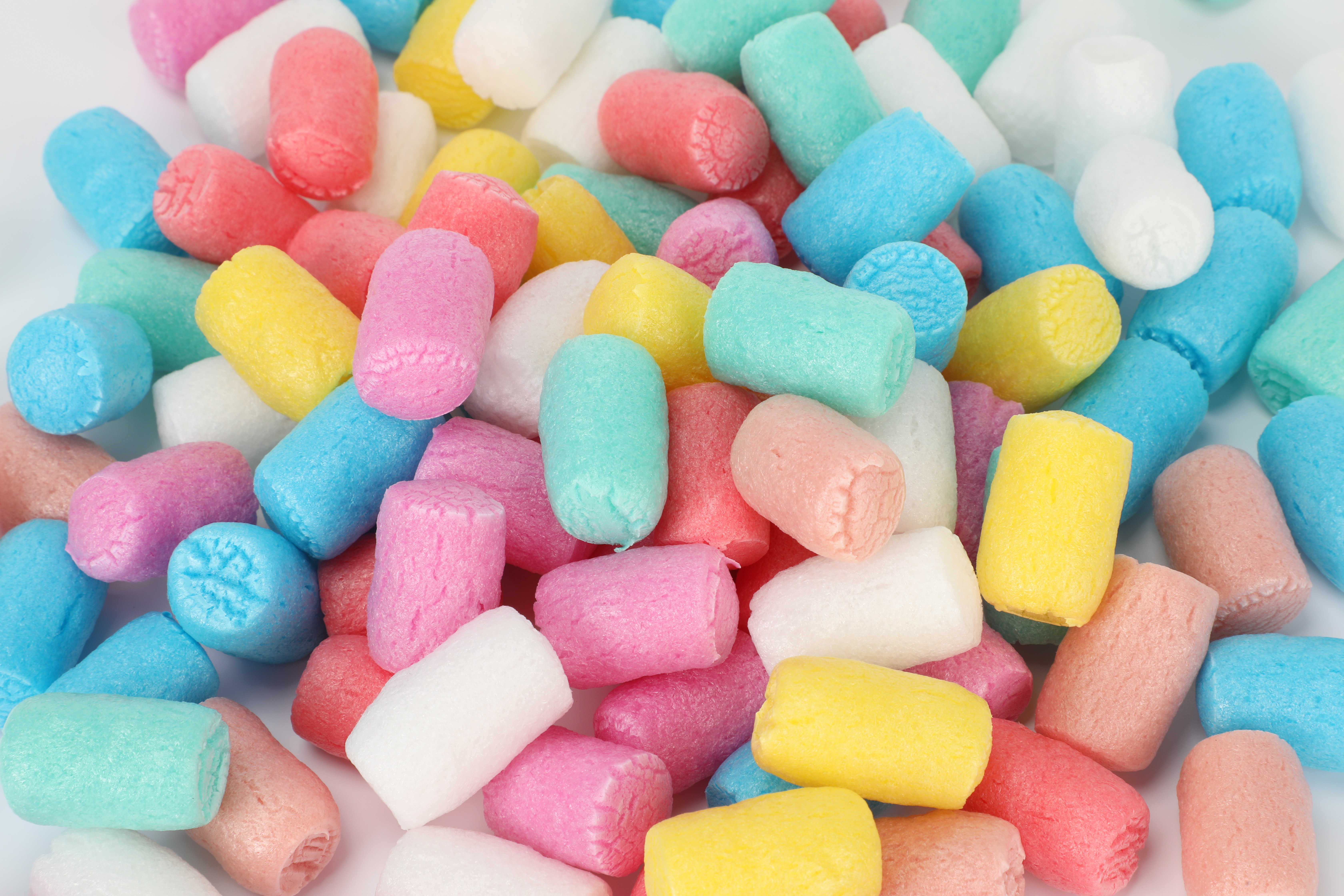
Navigating the sustainable packaging market requires strict vigilance against greenwashing. Procurement teams must demand verified industry standards from any prospective protective packaging material supplier. Look for certifications such as ASTM D6400 or EN 13432. These guarantee that the material breaks down completely in commercial composting facilities within a specific timeframe without leaving toxic residue. BPI (Biodegradable Products Institute) certification provides an additional layer of third-party verification. Materials marketed simply as degradable without these certifications often contain traditional plastics mixed with chemical additives. These additives merely fracture the material into harmful microplastics. Request the actual certification documents and verify them against the issuing body's database before signing any procurement contracts.
Not all extrusion processes yield the same quality. When evaluating sample batches of water soluble packing peanuts wholesale, conduct a rigorous physical inspection. Assess the dust levels at the bottom of the sample bag. Excessive dust indicates poor extrusion and will clog warehouse hoppers. Check for uniform shape and density. Inconsistent puffing leads to unpredictable cushioning performance. Evaluate the odor. High-quality industrial starches have a neutral or faintly toasted scent. Strong, sour odors indicate degraded raw materials. Inquire about the supplier's raw material sourcing to ensure they utilize industrial-grade, non-GMO starches optimized for packaging rather than food-grade surplus. A reliable supplier will provide detailed specification sheets outlining the exact starch composition and moisture content of their product.
The production scalability of starch peanuts differs from traditional plastics. Extruding organic matter requires precise moisture and temperature controls, which extends manufacturing times during periods of high demand. Procurement teams must analyze the supplier's production capacity and geographic distribution network. Relying on a single manufacturing facility leads to critical shortages during peak holiday seasons. Supply chain managers should establish higher buffer stock requirements than they would for EPS. Factor in longer lead times and the necessity of climate-controlled storage space for that buffer inventory. Ask potential suppliers about their contingency plans for raw material shortages, as agricultural yields can impact starch availability.
Evaluating this material requires looking beyond the initial acquisition phase. You must model the operational impacts against potential reductions in product return rates. Assuming the void fill is correctly matched to the product weight, starch peanuts provide excellent shock absorption for lightweight goods. Consider the elimination of EPS disposal logistics. Many municipalities and commercial waste management services refuse to handle unrecyclable polystyrene. Transitioning to a dissolvable material directly removes these backend waste management burdens from your logistics network. Your receiving department no longer needs to coordinate specialized recycling pickups for incoming EPS packaging, freeing up dock space and labor hours.
The environmental advantages of starch-based void fill provide tangible metrics for corporate sustainability reports. Switching away from petroleum-based plastics results in measurable waste reduction and lowers the carbon footprint of your outbound logistics. These metrics support Environmental, Social, and Governance (ESG) compliance. Documenting the exact cubic footage of plastic removed from your supply chain strengthens brand positioning. It satisfies institutional investor requirements and aligns with increasingly stringent regional packaging regulations. You can track the volume of starch peanuts deployed monthly and convert that data into plastic-reduction metrics for your annual sustainability disclosures.
Unlike on-demand air pillow systems that store flat and inflate at the packing station, loose-fill peanuts arrive fully expanded. They require massive amounts of physical warehouse space. Receiving bulk shipments means dedicating significant square footage or vertical racking entirely to void fill storage. Warehouse managers must calculate the exact spatial footprint required to house enough bulk biodegradable packing peanuts to sustain daily fulfillment velocity. This spatial requirement necessitates overhead hopper systems to keep the floor clear. You must ensure your facility has the vertical clearance to accommodate these large gravity-fed dispensing bags above the packing stations.
Understanding the exact density difference between EPS and starch is critical for accurate freight forecasting. EPS typically weighs around 0.15 pounds per cubic foot. Starch-based peanuts can weigh between 0.6 and 1.2 pounds per cubic foot, depending on the extrusion process. While this seems negligible, a large master carton requiring five cubic feet of void fill will see a weight increase of several pounds. If your carrier contract utilizes a strict DIM divisor, this added physical weight might push the package into a higher billing tier. Work closely with your logistics analysts to map out these potential weight shifts across your top fifty fastest-moving SKUs. Adjusting the carton dimensions by just half an inch can sometimes offset the density penalty of the sustainable fill.
Shipping liquids, cosmetics, or dangerous goods with water-soluble fill introduces a severe structural risk. If a primary container leaks during transit, the escaping liquid immediately dissolves the surrounding peanuts. This creates a cascading failure. The void space opens up, the product shifts violently, and subsequent impacts shatter the remaining items. Strict secondary containment strategies are mandatory. All liquid products must be sealed inside waterproof poly bags or correctly closed inner packagings before being placed into the void fill. Never allow liquid containers direct contact with starch-based cushioning. Train your packing staff to double-check the seals on all liquid items and enforce a zero-tolerance policy for skipping the secondary bagging step.
Transitioning from EPS to starch peanuts requires evaluating your existing dispensing equipment. Overhead hopper systems designed for smooth, lightweight plastics struggle with the slightly heavier, higher-friction surface of starch foams. Bridging occurs when peanuts interlock and block the dispenser chute. The friction of moving through the hopper generates fine starch dust. This dust accumulates on sensors, conveyor belts, and scanner lenses. Maintenance teams must adjust hopper baffle angles to prevent bridging. Implement more frequent cleaning schedules to manage the organic dust fallout. You might need to install anti-static brushes or pneumatic agitators inside the hoppers to keep the starch peanuts flowing smoothly during high-volume shifts.
Warehouse maintenance teams must establish a proactive cleaning schedule when switching to starch foams. The organic dust generated by the peanuts settles on overhead lighting, scanner lenses, and conveyor belt rollers. If left unchecked, this dust absorbs ambient moisture and hardens into a cement-like paste. Wipe down all optical sensors at the end of every shift. Vacuum the hopper chutes weekly to remove accumulated dust before it causes bridging. Train your maintenance staff to identify the early signs of hopper clogs, such as irregular dispensing volumes or unusual motor strain on the agitators.
Hopper Issue | Root Cause | Mitigation Strategy |
|---|---|---|
Bridging / Clogging | High surface friction of starch peanuts | Adjust baffle angles; install pneumatic agitators. |
Dust Accumulation | Friction during dispensing | Implement daily vacuuming; shield optical sensors. |
Material Clumping | High warehouse humidity | Install dehumidifiers near storage racks. |
Slow Dispensing | Narrow chute diameter | Widen dispenser valves to accommodate denser flow. |
The sustainability of your packaging only matters if the end-customer recognizes and properly disposes of it. Many consumers mistake high-quality starch peanuts for EPS and throw them into the trash, negating the environmental benefit. Outline best practices for inserting clear disposal instructions directly into the package. Include a printed insert or a QR code on the packing slip. The QR code can link to a quick video tutorial showing customers how easily the peanuts compost in a garden or dissolve under a running sink. Turning the water test into an interactive brand touchpoint maximizes the marketing value of your sustainable procurement choice. Clear communication prevents customer frustration and reinforces your brand's commitment to environmental responsibility.
Order a minimum viable sample from a certified supplier and inspect it for dust, odor, and uniform density.
Conduct standardized drop tests using your specific product weights to verify the material's compression limits.
Perform a humidity exposure test by leaving a packed carton in a non-climate-controlled environment for 48 hours to check for residue transfer.
Audit your warehouse hoppers and adjust baffle angles to accommodate the higher friction of starch-based foams.
Design and print instructional inserts to educate your customers on proper dissolving or composting techniques.
A: While they dissolve in water, flushing large commercial quantities down drains is not recommended due to potential starch buildup in older pipes. Dissolving small amounts in a sink under warm running water is safe for residential plumbing. Adding them to a compost bin remains the most environmentally beneficial disposal method.
A: Under optimal conditions, they have a shelf life of up to 24 months. They must be kept in a dry, temperature-controlled environment. Exposure to high humidity or extreme temperature fluctuations causes them to shrink, degrade, or fuse together long before their expiration date.
A: No. Items exceeding 15 pounds typically crush starch-based peanuts during transit vibrations, creating empty void space and risking product damage. For heavy items, use molded pulp, corrugated inserts, or engineered foam blocks to bear the weight.
A: High humidity or condensation inside shipping trailers causes the hydrophilic starch to melt slightly against the product. To prevent this sticky residue, always place sensitive items inside a sealed poly bag before surrounding them with the peanuts.
A: True biodegradable or compostable peanuts are made from organic starches that break down entirely into natural elements. Products labeled merely degradable or oxo-degradable are often traditional plastics mixed with additives that cause them to fracture into harmful, persistent microplastics.
A: Generally, no. While made from corn or sorghum starch, the high-heat extrusion process destroys the nutritional value of the material. Most manufacturers also remove the sugars, rendering the final foam unappealing to rodents and insects.
A: Always request official, third-party certifications. Look for the BPI (Biodegradable Products Institute) certification, DIN CERTCO, or compliance with ASTM D6400 and EN 13432 standards. These guarantee the material breaks down safely in commercial composting facilities.


