
- All
- Product Name
- Product Keyword
- Product Model
- Product Summary
- Product Description
- Multi Field Search
Views: 0 Author: Site Editor Publish Time: 2026-09-28 Origin: Site


Increasing regulatory pressures and shifting consumer demands force fulfillment centers to audit their void fill and protective packaging materials. Extended Producer Responsibility laws mandate stricter waste management across the supply chain. Operations managers must balance the mandate for sustainable packaging with strict requirements for damage reduction, packer throughput, and dimensional weight costs. Sticking to legacy materials often results in hidden inefficiencies and compliance risks. Moving beyond surface-level sustainability claims requires a rigorous, data-driven comparison. You need to evaluate the incumbent standard against modern engineered solutions. This analysis breaks down the performance metrics between traditional plastic materials and the kraft paper bubble pillow. We will assess shock absorption, calculate operational impacts, and implement the right void fill strategy for high-volume shipping environments.
Protection Parity: Engineered kraft paper bubble pillows offer equivalent or superior shock absorption for medium-to-heavy items due to the structural rigidity of the paper, though plastic retains an edge for highly sensitive surface-scratch protection.
Cost Dynamics: While the per-foot material cost of paper may be higher, overall expenses often favor paper when factoring in reduced storage footprints, elimination of plastic taxes, and faster packing times.
Operational Scalability: Transitioning to paper bubble wrap requires upfront evaluation of dispensing machinery and packer ergonomics to prevent bottlenecks during peak fulfillment seasons.
Brand and Compliance: Adopting a plastic bubble wrap alternative directly addresses consumer unboxing friction, elevates brand perception, and aligns with tightening global packaging waste regulations.
Evaluating protective packaging starts with raw physics on the warehouse floor. Shock absorption and vibration dampening dictate how materials disperse kinetic energy during transit drops and conveyor sorting. When a parcel hits a sorting chute or drops from a delivery truck, the internal void fill must absorb the impact before it reaches the product. You must measure how effectively the material compresses and rebounds under sudden force. We rely on standardized drop tests, such as ISTA 3A, to simulate the harsh realities of the parcel shipping network.
Surface protection forms the next critical metric. Fulfillment teams must assess the risk of micro-abrasions on polished, painted, or delicate product surfaces. Rough materials can degrade product finishes during transit vibrations. A high-gloss automotive part requires different surface considerations than a cast-iron skillet. Conformability also plays a massive role in pack station efficiency. The ideal material wraps tightly around irregular shapes without adding excessive bulk. Poor conformability leaves dead space inside the carton. This dead space increases the risk of product migration, allowing items to shift and sustain impact damage against the carton walls.
Comparing material costs requires looking beyond the invoice price per roll. You must evaluate the cost per cubic foot of void fill against the warehouse real estate required to store it. Storing un-inflated plastic rolls takes up significant racking space. A single pallet of flat-packed kraft paper yields the same cubic volume of void fill as dozens of rolls of pre-inflated plastic. This density frees up valuable warehouse capacity for revenue-generating product inventory.
Dimensional weight directly impacts final carrier shipping rates. The thickness and weight of the protective layer influence the outer carton size. Thicker materials force packers into larger boxes, triggering dimensional weight penalties from major carriers. Labor and throughput also drive operational expenses on the floor. You must measure the exact seconds required for a packer to dispense, cut, wrap, and tape the material. Faster handling at the pack station multiplies into massive labor savings across a multi-shift operation.
Regulatory frameworks are reshaping fulfillment strategies globally. Plastic taxes, extended producer responsibility fees, and municipal bans on single-use plastics penalize legacy materials. Operations relying heavily on poly-films face mounting compliance costs and administrative burdens. Transitioning to a paper bubble wrap mitigates these regulatory risks immediately.
End-of-life disposal realities dictate consumer behavior. Most plastic films require specialized store drop-off recycling programs. Consumers rarely utilize these channels, leading to massive landfill waste. Paper materials integrate seamlessly into standard curbside recycling bins. This frictionless disposal process aligns with municipal waste systems and prevents downstream environmental impact. You eliminate the burden on the end-user, ensuring the packaging actually gets recycled.
The unboxing experience serves as a physical touchpoint between brand and consumer. The tactile, rustic feel of eco-friendly protective packaging influences customer retention. It elevates perceived product value compared to standard poly-plastics. Consumers increasingly associate heavy plastic use with low-quality or irresponsible brands. A clean, paper-based presentation communicates quality and environmental responsibility.
Customization potential further separates paper from plastic. Printing water-based, branded inks on kraft paper proves highly efficient. It creates a cohesive brand presentation inside the box without compromising recyclability. Printing on plastic film involves complex setup times and significant environmental trade-offs regarding ink toxicity and recycling contamination.
Engineering a paper-based void fill requires precise mechanical manipulation. Deep-embossed kraft paper traps air within its structure. This creates rigidity designed to mimic the cushioning effect of plastic bubbles. The embossing process stretches the paper fibers, forming a resilient three-dimensional matrix. This matrix absorbs impact through controlled deformation rather than air displacement. When a heavy object strikes the paper, the fibers crush slightly, absorbing the kinetic energy.
Paper weight determines overall performance. We evaluate Grams per Square Meter to understand puncture resistance and tear strength. Higher GSM papers withstand heavier industrial components but sacrifice some conformability. Lower GSM papers wrap easily around small items but may tear under sharp impacts. Manufacturers seal these paper pillows using starch-based adhesives or mechanical crimping. Both methods maintain complete curbside recyclability without introducing synthetic contaminants into the paper stream.
Crush resistance highlights a major divergence between materials. Paper pillows often outperform plastic under sustained heavy loads. When heavy items shift during transit, plastic bubbles frequently pop and lose all protective value. Paper structures compress under load but maintain a physical buffer. The dense fiber network continues to separate the product from the carton wall even after initial compression.
Pack security relies heavily on tape adhesion. Kraft paper demonstrates superior bonding capability with water-activated tape. The adhesive penetrates the paper fibers, creating a tamper-evident seal that reinforces carton strength. Plastic films resist standard adhesives, often requiring excessive layers of poly-tape to secure the wrap. However, moisture vulnerability remains a limitation for paper. High-humidity transit environments can degrade paper integrity. Operations shipping through maritime routes must implement mitigation strategies like desiccants or moisture-resistant outer cartons.
Dust generation requires careful assessment. Friction during transit can release microscopic paper fibers. In clean-room environments or highly sensitive electronic fulfillment, this particulate generation poses a risk. Packers must evaluate whether the specific SKU can tolerate minor dust exposure or if it requires a poly-bag barrier.
Integrating paper systems changes the pack station layout. On-demand dispensing machines require dedicated space for paper embossing and inflating mechanisms. While the raw material footprint shrinks, the machinery footprint at the bench increases. Operations must route power and ensure adequate overhead or under-bench clearance for the equipment. You have to design the pack station ergonomically to prevent excessive reaching or bending.
Ergonomics heavily favor paper materials. Tearing paper along perforations reduces repetitive strain injuries. Cutting plastic wrap requires utility knives or automated cutters, introducing safety hazards and slowing down the packing motion. The tactile feedback of tearing paper allows packers to work faster and safer during peak volume periods.
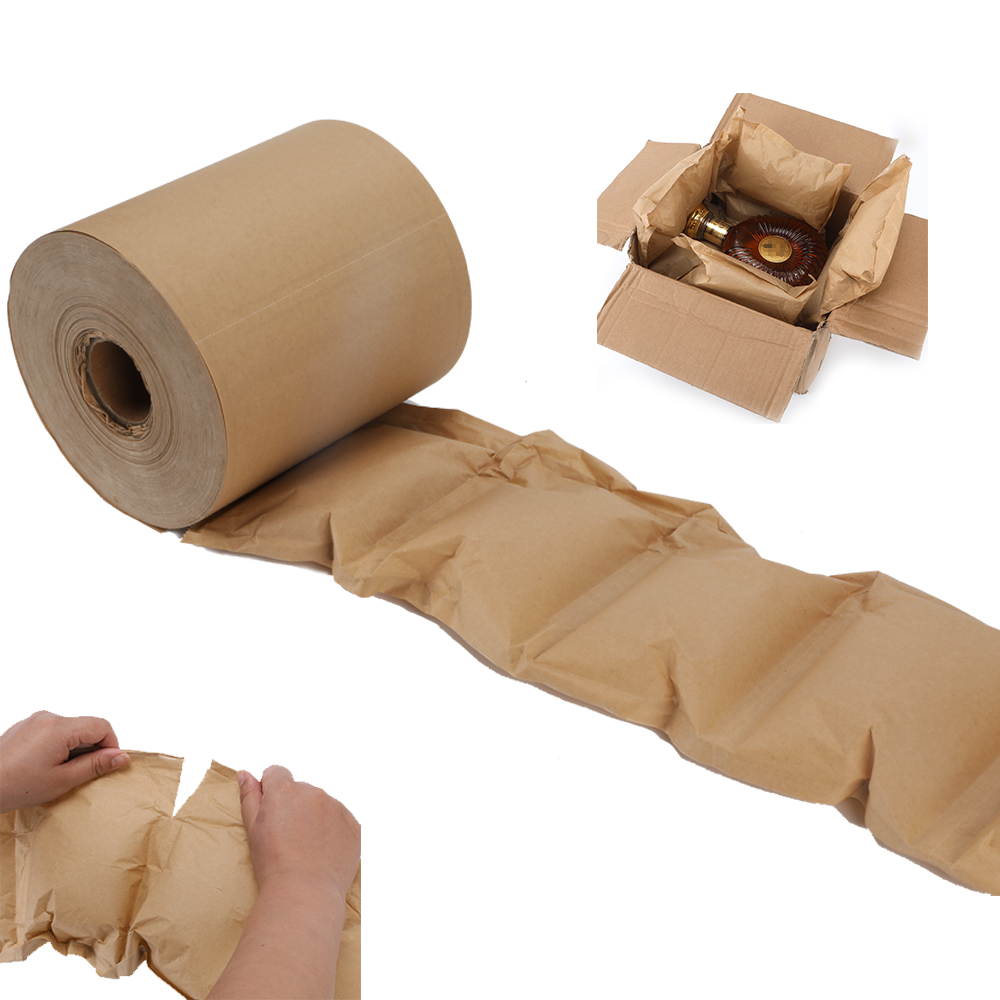
Sealed-air cellular cushioning relies on simple physics. Trapped air provides excellent shock absorption for lightweight, fragile items. The air cells displace kinetic energy efficiently upon impact. This mechanism makes plastic highly effective for low-weight products that cannot trigger the compression resistance of paper. A delicate glass ornament benefits immensely from the soft, yielding nature of air-filled plastic.
Water and vapor barriers represent a significant operational advantage. Plastic offers inherent resistance to moisture, spills, and humidity during transit. Liquid products or items sensitive to atmospheric moisture benefit from this impermeable layer. Transparency also provides a distinct operational benefit. Packers and receivers can scan barcodes directly through the packaging material. This accelerates inventory intake and reduces handling steps on the receiving dock.
The massive storage footprint required for pre-inflated rolls creates severe warehouse inefficiencies. Racking space dedicated to storing air drains operational resources. Every square foot occupied by lightweight plastic rolls represents lost revenue-generating storage for actual product inventory. Warehouse managers constantly battle the logistics of moving bulky plastic rolls from reserve storage to active pack stations.
Temperature and altitude sensitivity introduce transit risks. Extreme heat, freezing temperatures, or high-altitude shipping routes alter the internal pressure of plastic bubbles. Heat causes over-expansion and popping. Cold causes deflation. High altitudes stretch the plastic, reducing its cushioning capacity upon return to sea level. Finding a reliable plastic bubble wrap alternative eliminates these atmospheric vulnerabilities.
End-user friction continues to escalate. Growing consumer frustration with non-curbside recyclable plastics leads to negative brand interactions. Wrap rage occurs when consumers struggle to cut through excessive poly-tape and plastic layers. Furthermore, price volatility plagues plastic procurement. The correlation between plastic bubble wrap costs and petrochemical market fluctuations makes annual budgeting unpredictable.
Heavy and industrial goods demand structural resilience. The rigidity of the kraft paper bubble pillow wins against plastic popping. Dense metal parts or heavy machinery components will instantly crush plastic air cells. Paper maintains a physical barrier, preventing the heavy item from punching through the outer corrugate.
Fragile glassware requires a different approach. Packers must use multi-layering techniques with paper to achieve the same localized cushioning provided by large-cell plastic. Plastic conforms easily to delicate stems and thin glass walls. Electronics and polished goods introduce static and abrasion risks. Paper is naturally anti-static, protecting internal circuitry. However, rough paper fibers can cause surface abrasions on high-gloss finishes, whereas smooth plastic films glide over these surfaces safely.
Performance Metric | Kraft Paper Bubble Pillow | Plastic Bubble Wrap |
|---|---|---|
Heavy Load Crush Resistance | Excellent (Compresses but maintains buffer) | Poor (Bubbles pop under high pressure) |
Moisture Barrier | Low (Vulnerable to high humidity) | High (Impermeable to liquids) |
Surface Abrasion Risk | Moderate (Friction can dull high-gloss items) | Low (Smooth surface protects finishes) |
Storage Density | High (Flat-packed rolls) | Low (Pre-inflated rolls require massive space) |
End-Consumer Recycling | Curbside Recyclable | Store Drop-Off Required |
Machine integration drives pack station efficiency. You must compare the maintenance schedules, leasing structures, and jam-rates of paper void-fill machines against air-pillow inflators. Paper machines involve moving mechanical parts, cutting blades, and embossing gears. They require regular dust clearing and preventative maintenance. Air inflators are mechanically simpler but rely on precise heat-sealing bands that degrade over time and require frequent replacement.
Packer training dictates material consumption rates. The learning curve associated with optimizing paper usage is steeper. Packers accustomed to wrapping items five times in plastic must learn to trust a single, strategic layer of paper. Without proper training, packers will over-pack with paper, driving up material waste and increasing dimensional weight unnecessarily. You must implement strict standard operating procedures to control material usage.
Direct material costs often reveal a premium associated with engineered paper solutions. Producing deep-embossed, high-GSM kraft paper requires specialized manufacturing processes. Operations must acknowledge this upfront premium when forecasting quarterly packaging budgets.
Offsetting this premium requires a holistic operational view. You calculate ROI through reduced dimensional weight penalties. Paper allows for tighter packing, enabling the use of smaller cartons. Lower damage rates on heavy items reduce reverse logistics costs. Faster tape application with water-activated tape increases units packed per hour. Finally, eliminating plastic disposal fees and compliance taxes directly improves the bottom line.
Vetting a sustainable packaging supplier requires strict due diligence. Look for FSC-certification to ensure responsible forestry practices. Demand supply chain transparency regarding raw material origins. Evaluate the machine Service Level Agreement terms carefully. A machine breakdown during peak season halts fulfillment. Your supplier must guarantee rapid technical support and replacement parts.
Material consistency separates premium suppliers from budget options. Ensure batch-to-batch consistency in paper GSM and embossing depth. Variations in paper thickness cause machine jams and compromise drop-test performance. Request technical specification sheets for every production run to verify structural integrity.
Run a controlled A/B testing protocol before a facility-wide rollout. You need hard data to justify the transition and refine your packing procedures. Follow these specific steps to execute a successful pilot program:
Select a high-volume, medium-weight SKU with a documented history of transit damage.
Isolate one specific pack station and train a dedicated operator on the new paper dispensing equipment.
Pack half the daily volume in legacy plastic and half in the engineered paper solution.
Track transit damage, packer throughput, and material consumption over a strict four-week period.
Analyze the data to adjust paper lengths and wrapping techniques before expanding to other stations.
Establish clear feedback loops. Gather data directly from the packing floor regarding ergonomics, machine reliability, and packing speed. Simultaneously, monitor end-consumer feedback for unboxing experience reviews and damage reports. Use a phased rollout strategy. Deplete legacy plastic inventory gradually while phasing in the new material. This prevents capital waste and allows packers to adjust to the new workflow without overwhelming the operation.
Audit your current damage rates by product category to identify where legacy materials fail under heavy loads.
Calculate your annual plastic tax liabilities and projected compliance costs for the next fiscal year.
Request a machine demo and run a time-study at a single pack station to measure throughput differences.
Update your standard operating procedures to train packers on optimal paper wrapping techniques.
Launch a pilot program on your highest-volume SKU to validate performance before scaling facility-wide.
A: Yes, for most applications. They utilize different shock absorption mechanisms. Plastic relies on air displacement, which works well for lightweight items but pops under heavy loads. Paper uses structural compression. The embossed fibers crush slightly upon impact, maintaining a physical buffer that excels at protecting medium-to-heavy products.
A: It rarely increases overall shipping costs. While paper is physically heavier than plastic film, it often requires less volume to secure an item. This tighter pack reduces the outer carton size, helping operations avoid expensive dimensional weight penalties imposed by carriers.
A: Transitioning typically requires on-demand embossing and dispensing machines. These units sit at or above the pack station. They pull flat kraft paper from a dense roll, run it through forming gears to create the 3D bubble structure, and dispense it directly to the packer.
A: Yes. FSC-certified kraft paper products can be tossed directly into standard residential curbside recycling bins. In contrast, traditional plastic bubble films contaminate curbside sorting facilities and require consumers to take them to specialized store-drop-off locations.
A: Prioritize suppliers offering strict machine maintenance SLAs and rapid technical support. Verify their material certifications, such as FSC compliance. Ensure they have a scalable supply chain capable of maintaining consistent paper GSM and embossing quality across large batch orders.
A: There is a minor risk of micro-abrasions on highly polished, high-gloss, or painted surfaces due to paper fiber friction during transit. For these specific items, packers should use a smooth tissue-paper interleaf before applying the heavier paper bubble layer.
A: No. Paper remains structurally stable across extreme temperatures and high-altitude shipping routes. Plastic air cells are highly sensitive to atmospheric changes; they expand and pop in extreme heat or high altitudes, and deflate in freezing temperatures, losing their protective qualities.


