
- All
- Product Name
- Product Keyword
- Product Model
- Product Summary
- Product Description
- Multi Field Search
Views: 0 Author: Site Editor Publish Time: 2026-09-22 Origin: Site


Safe wine bottle packaging should stop glass-to-glass contact, protect the neck and base, and prevent movement inside the carton. The best choice depends on the bottle’s size, shape, weight, value, shipping route, and the number of bottles in each box. Air columns, bubble film, paper sleeves, dividers, and strong cartons can all help, but each solves a different part of the problem.
A wine bottle has several weak areas. The neck is narrow, the shoulder changes shape, and the base can receive strong force when a box is dropped. Labels and decorative finishes may also be damaged even when the glass remains intact.
Wine bottle packaging must manage more than one risk:
Bottles hitting each other inside a multi-bottle carton
Impact reaching the base, shoulder, or neck
Side pressure caused by stacking or a crushed box
Vibration during a long shipping route
Labels rubbing against rough materials
Empty space that allows a bottle to move
Moisture reaching paper labels or presentation boxes
The complete package should combine product fit, cushioning, separation, void control, and a suitable outer carton.
There is no single safest design. Fitted air columns are a strong option for demanding parcel delivery because they surround the bottle. A paper sleeve and divider may suit retail presentation, while flexible bubble film can protect mixed bottle shapes.
The safest wine bottle packaging is tested with the actual bottle, closure, inner materials, carton, and shipping method. Extra material cannot correct poor fit or pressure around the neck.
The following table gives buyers a practical comparison before sampling and testing.
Packaging option | Best use | Main advantage | Main consideration |
|---|---|---|---|
Fitted air column bag | Single bottles and repeat-size shipments | Surrounds the bottle and limits movement | Must match bottle size and inflation level |
Air bubble film | Mixed bottle shapes and manual packing | Flexible and easy to wrap | Needs consistent wrapping and secure placement |
Honeycomb paper sleeve | Surface separation, retail packs, and paper-based presentation | Protects labels and prevents direct contact | May need added cushioning for demanding parcel routes |
Corrugated divider | Several bottles in one carton | Separates each bottle into its own cell | Cell size and board strength must fit the load |
Molded paper insert | Repeat-size bottles and presentation boxes | Stable position and neat unboxing | Usually requires a product-specific design |
Air pillow or paper void fill | Filling space around an inner pack | Reduces movement in the outer carton | Should not be the only protection around bare glass |
Fitted air columns can balance cushioning and position control for single bottles. Wine bottle packaging for several bottles often needs individual protection plus dividers.
The narrow neck is vulnerable to sideways movement and top pressure. Avoid placing a hard edge against the neck, closure, or decorative seal.
Wine bottle packaging should prevent direct contact between glass surfaces and keep dividers from collapsing against the shoulder.
Bottom cushioning should remain stable under the bottle’s weight and should not compress fully during handling.
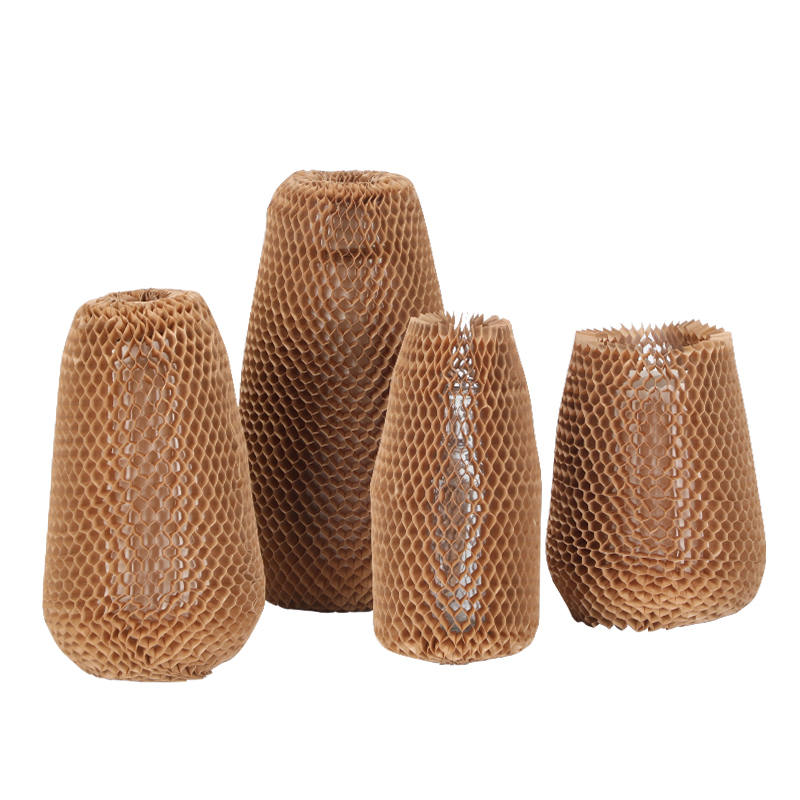
Premium labels and coatings need a clean contact layer. A honeycomb paper sleeve can separate surfaces and create a paper-based appearance, but demanding routes may need added impact protection.
Air columns suit repeat-size bottles that need protection on several sides. EPACK’s wine bottle product uses a U-shaped structure and independent chambers, so surrounding chambers can continue cushioning if one is damaged.
This bottle protective packaging may suit wineries, distributors, gift suppliers, online retailers, and fulfillment centers. It is stored uninflated but needs suitable inflation equipment and settings.
Choose air columns by fit. An oversized bag may allow movement, while a tight or overfilled bag may place pressure in the wrong area.
Bubble film suits mixed bottle shapes because it follows curves and combines easily with dividers or an inner box.
Workers may use different amounts, leave the base exposed, or apply tape too tightly. A simple work instruction should show how weak areas are covered and how the wrapped bottle fits the carton.
Wrap each bottle separately and fill remaining space so the contents cannot slide or rotate.
A paper sleeve works well when the goal includes label protection, separation, presentation, and reduced use of plastic wrapping. The expandable structure can fit around cylindrical products and is useful for wine, spirits, cosmetics, and other glass bottle packaging applications.
It is important to understand its role. A sleeve can help with rubbing and light cushioning, but it may not provide enough protection by itself for every parcel network. Heavy bottles, long routes, and frequent handling may require a divider, inner carton, air column, or added cushioning. Select the full system from test results, not from material appearance alone.
Record the widest diameter, height, neck shape, closure, weight, and decorated parts; bottles with the same volume may have different shapes.
Use a clean first layer over labels or coatings, keep tape away from the bottle, and check that sleeve edges do not catch decorative details.
Apply the wine bottle packaging evenly, keep cushioning under the base, and avoid tight bands around the neck.
Give each bottle its own protected section and use fitted dividers that stay upright when the box moves.
Fill open areas without forcing bottles against the carton wall, including top space that can allow vertical movement.
Use a carton suitable for the packed weight, check for movement, and correct the internal fit before sealing.
Wine bottle packaging should support both product protection and daily operations. Buyers should compare:
Bottle range and size variation
Single-bottle or multi-bottle carton design
Manual packing speed and worker consistency
Storage space for packaging materials
Need for on-demand inflation equipment
Label, print, and unboxing requirements
Material recovery options in the destination market
Custom sizes, printing, and order volume
Supplier sampling and technical support
Share bottle drawings, photos, dimensions, packed weight, carton layout, shipping route, and current damage points with a custom protective packaging supplier. This information helps the supplier recommend a standard format or develop a fitted solution.
Test real production bottles with the intended labels, closures, dividers, void fill, carton, and seal. Inspect for cracks, leaks, rubbing, loose closures, flat cushioning, and movement.
Match the test to the route and sales channel. Consider formal testing for valuable shipments or new designs, and track damage, material use, packing time, and customer feedback before approving the wine bottle packaging.
Selecting packaging by bottle volume instead of actual dimensions
Wrapping several bottles together without separation
Protecting the body but leaving the neck or base exposed
Using a large carton and filling only part of the empty space
Treating a paper sleeve as complete impact protection without testing
Inflating air columns too much or too little
Allowing tape to touch a label or decorative finish
Ignoring packed weight when choosing the outer carton
Changing a bottle design without reviewing the package fit
Safe wine bottle packaging begins with the bottle, not the material. Measure the neck, body, base, closure, weight, and surface finish, then consider the carton layout and shipping route. Fitted air columns are a strong choice for repeat-size bottles that need protection on several sides. Bubble film offers flexibility for mixed shapes, while honeycomb paper sleeves can support separation, label protection, and a paper-based presentation. Multi-bottle shipments also need reliable dividers and movement control.
No option should be selected only because it looks thick or sustainable. The complete package must fit the bottle, remain stable under its weight, and perform through real handling conditions. Sampling and testing can reveal loose space, weak corners, label rubbing, and inconsistent packing before a larger order begins.
EPACK supplies air column materials, air bubble film, honeycomb paper products, and related cushioning equipment. We can review your bottle dimensions, weak points, carton layout, packing volume, and route to help identify a standard or customized wine bottle packaging approach. Contact our packaging team to discuss your project.
A fitted air column with a strong outer carton is a practical option when its size and inflation level match the bottle.
It can protect the surface and provide light cushioning, but demanding shipping routes may need additional impact protection and a divider or carton system.
Yes, EPACK can review bottle dimensions, weight, weak points, order volume, and packing method for a customized solution.


