
- All
- Product Name
- Product Keyword
- Product Model
- Product Summary
- Product Description
- Multi Field Search
Views: 0 Author: Site Editor Publish Time: 2026-11-06 Origin: Site


Shipping fragile, high-value goods creates a massive headache when you are forced to meet strict corporate sustainability mandates. You have to eliminate single-use plastics, but you cannot afford a spike in transit damage rates. Swapping out traditional expanded polystyrene (EPS) for eco-friendly alternatives brings up real operational concerns. Warehouse managers worry about crush resistance, moisture damage, and higher dimensional weight costs. You cannot compromise the structural integrity of your parcels just to hit a green metric. This guide breaks down the engineering and on-the-floor realities of using starch-based void fill. We evaluate shock attenuation, settling dynamics, and climatic vulnerabilities to see if these materials can actually replace Styrofoam on your packing lines without ruining your products.
Performance Parity: Corn starch packing peanuts offer comparable shock attenuation and impact resistance to traditional EPS, effectively preventing product migration when properly overfilled.
The Moisture Caveat: Starch-based materials are inherently hydrophilic; they require strict humidity controls and are unsuitable for shipping unsealed liquids or operating in non-climate-controlled freight environments.
Anti-Static Advantage: Unlike polystyrene, biodegradable options are naturally anti-static, making them a superior choice for fragile electronic components and sensitive circuitry.
Operational Requirements: Utilizing packing peanuts for bulk shipping requires specific warehouse climate controls, strict inventory rotation to prevent premature degradation, and an acceptance of slightly higher material and freight costs.
Protecting high-value fragile goods such as glass, ceramics, and electronics requires precise shock attenuation. When a parcel experiences a drop impact, the kinetic energy must disperse through the void fill rather than transferring to the product. Effective cushioning materials compress upon impact, decelerating the item gradually to prevent shattering or internal component failure. The void fill must possess a specific compression modulus that allows it to absorb energy without bottoming out against the rigid exterior carton. If the material compresses too easily, the product hits the concrete. If it is too rigid, the shockwave travels directly into the fragile item.
Sustained vibration during transit presents an equally critical threat. Freight trucks, conveyor belts, and aircraft induce continuous low-frequency vibrations that cause loose-fill materials to settle. Void fill settling leads to product migration, where the fragile item shifts from the center of the box toward the edges. Once a product makes direct contact with the corrugated container walls, it loses all impact protection. Evaluating any new filler material requires analyzing its interlocking capability and resistance to vibration-induced displacement. You need a material that locks together under pressure rather than acting like fluid sand during a long haul.
Freight environments are highly unpredictable. Parcels routinely endure extreme temperature fluctuations, high humidity, and condensation inside shipping containers or delivery vehicles. Standard protective packaging filler materials must maintain their structural integrity regardless of the ambient climate. If a cushioning material absorbs ambient moisture, it may soften, compress prematurely, or lose its rebound capacity entirely. A trailer sitting in a humid rail yard can easily reach temperatures and humidity levels that compromise inferior packaging.
Establishing baseline performance metrics is necessary to avoid increasing return merchandise authorization (RMA) rates. A sustainable alternative must demonstrate consistent load-bearing capacity across varying humidity levels. It must also resist thermal degradation during prolonged transit. Failing to account for these climatic variables inevitably leads to compromised shipments. When products break, you offset any environmental benefits with the massive carbon footprint of reverse logistics, disposal, and replacement manufacturing.
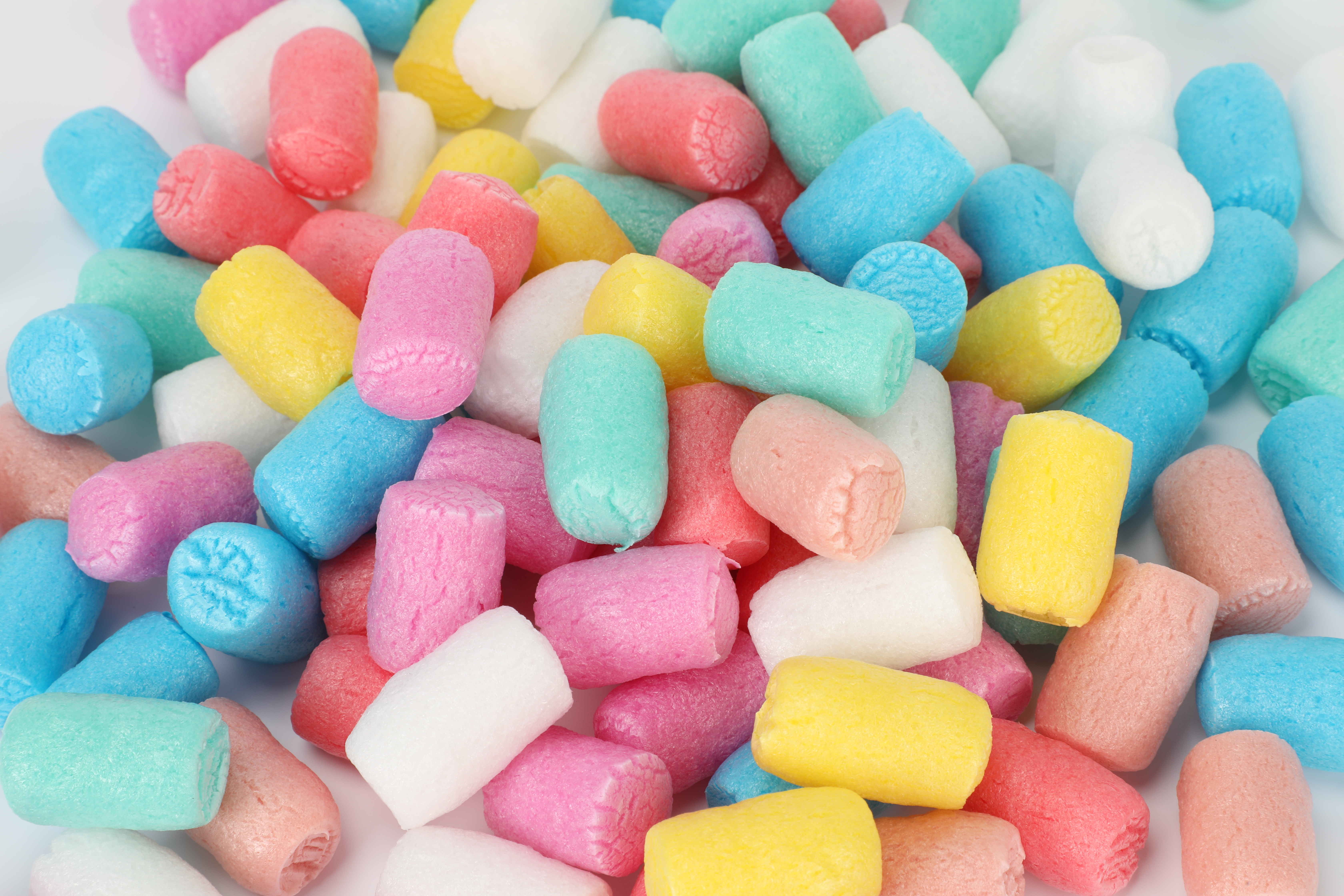
Biodegradable loose fill relies on extruded starch polymers, typically derived from corn or sorghum. During manufacturing, raw starch is mixed with water and subjected to high heat and pressure inside an extruder. As the mixture exits the die, the sudden drop in pressure causes the water to flash into steam, expanding the starch into a lightweight, cellular structure. This process mimics the closed-cell foam architecture of EPS, creating millions of tiny air pockets that provide shock absorption. The resulting foam is lightweight, pliable, and capable of absorbing significant kinetic energy.
Verifying the environmental claims of these materials requires looking for specific industry certifications. ASTM D6400, BPI certification, and EN 13432 are the primary standards that confirm materials are genuinely compostable packing peanuts for shipping. These certifications guarantee that the product will break down into water, carbon dioxide, and biomass within a specific timeframe under commercial composting conditions. This distinguishes them from greenwashed plastics that merely fragment into microplastics using chemical additives.
The defining characteristic of true biodegradable void fill packaging is its end-of-life profile. Unlike EPS, which persists in landfills for centuries, starch-based peanuts are entirely water-soluble. They dissolve rapidly upon contact with warm water, leaving no toxic residue behind. This allows end-users to dispose of the material safely in a standard sink or include it in their home compost bins without worrying about soil contamination.
While starch peanuts are highly effective, they operate alongside several other eco-friendly alternatives. Corrugated bubble wrap offers excellent edge protection but lacks the ability to fill large, irregular voids efficiently. Kraft paper crinkle provides strong presentation value and moderate cushioning, but it requires significant manual labor to pack correctly and adds substantial weight to the parcel. Molded pulp is ideal for high-volume, standardized products but requires expensive custom tooling and cannot adapt to mixed-SKU shipments on the fly.
Peanuts remain the most efficient solution for irregularly shaped fragile items. Their flowable nature allows them to surround complex geometries, providing 360-degree contouring without requiring packers to manually manipulate the material. This flowability translates directly to rapid fulfillment speeds, making loose fill indispensable for high-throughput operations handling diverse product catalogs.
Void Fill Type | Contouring Ability | Fulfillment Speed | Shock Absorption | Weight Profile | Moisture Resistance |
|---|---|---|---|---|---|
Starch Peanuts | Excellent (360-degree) | Very High | High | Low to Moderate | Poor |
Kraft Paper | Moderate | Medium | Moderate | High | Moderate |
Corrugated Bubble | Low (Best for wrapping) | Low | Moderate | Moderate | Moderate |
Molded Pulp | Perfect (Custom only) | High | Very High | Moderate | High |
When evaluating biodegradable packing peanuts for fragile items, load-bearing capacity is the primary metric. Starch-based peanuts possess a slightly different cellular structure than polystyrene. They can support heavy, fragile items like ceramic planters or dense electronics without immediately crushing. However, under sustained, heavy pressure over long transit times, starch polymers exhibit a lower yield strength than EPS. If a dense item rests on a thin layer of starch peanuts, the material may permanently deform, reducing the protective buffer between the product and the box wall.
The compression recovery rate, or rebound rate, of biodegradable peanuts is generally lower than traditional polystyrene. When EPS is compressed, it snaps back to its original shape rapidly. Starch peanuts absorb the impact effectively but may remain partially compressed after a severe shock. This means they offer excellent protection against the first major drop, but subsequent drops may encounter reduced cushioning thickness. You have to account for this degradation in multi-leg shipping routes.
To counteract the slightly higher settling rate and lower rebound capacity of starch peanuts during transit vibrations, packers must implement a strict overfill requirement. Cartons should be overfilled by 5-10% before sealing. The flaps of the corrugated box must compress the peanuts slightly when taped shut. This pre-compression locks the peanuts together, forming a rigid matrix that immobilizes the fragile item and prevents migration.
Follow these exact steps to ensure proper immobilization:
Dispense a two-inch base layer of starch peanuts into the bottom of the corrugated carton.
Center the fragile item on top of the base layer, ensuring at least two inches of clearance from all side walls.
Fill the remaining voids evenly, allowing the peanuts to flow into all crevices and corners.
Overfill the carton so the peanuts mound slightly above the top score lines of the box.
Fold the flaps down firmly, compressing the mound, and seal with reinforced water-activated tape.
The greatest vulnerability of starch-based void fill is its inherent hydrophilicity. The solubility of starch in water is a fatal flaw in high-humidity shipping environments. If a parcel is left on a rain-soaked porch or transported in a humid, non-climate-controlled trailer, the peanuts absorb moisture from the air. This causes them to shrink, become sticky, and lose their cellular structure. A sudden loss of volume inside the box eliminates all impact protection, leaving the product rattling against the cardboard.
Thermal insulation deficiencies also present a challenge. EPS is an exceptional insulator, frequently used to ship temperature-sensitive goods. Starch peanuts lack the same thermal resistance. They cannot maintain internal carton temperatures effectively. For fragile items that are also temperature-sensitive, such as cosmetics, pharmaceuticals, or vintage wine, starch peanuts will not prevent heat transfer. You will need dedicated insulated liners if temperature control is a requirement.
Mitigation strategies are mandatory when shipping cross-climate or shipping liquids. If a liquid product leaks inside a box filled with starch peanuts, the entire cushioning structure will dissolve into a sticky paste. Shippers must use poly-liners inside the corrugated box, include desiccants to control internal humidity, or seal liquid products in secondary barrier bags before packing them with biodegradable peanuts.
Traditional EPS generates significant static electricity through triboelectric charging. As polystyrene peanuts rub against each other or the product during transit, they build up a static charge. When the parcel is opened, this charge can arc to the nearest conductive surface. For microprocessors, bare circuit boards, and sensitive electronic components, a static discharge can cause catastrophic, invisible damage to the circuitry. You might not see the damage, but the component will fail in the field.
Biodegradable peanuts naturally resist static charge accumulation. Because starch retains a minute amount of inherent moisture, it dissipates electrical charges harmlessly. This eliminates the need for chemical anti-static coatings, which are often applied to specialized pink EPS peanuts. For electronics manufacturers, this natural anti-static property makes starch-based peanuts a superior protective choice, safeguarding fragile components without requiring additional processing or specialized SKUs.
Transitioning to sustainable materials requires analyzing the upfront financial impact. Corn starch packing peanuts carry a unit cost premium, typically running 10-20% higher than traditional EPS. The manufacturing process for extruded starch requires specific agricultural feedstocks and precise moisture control, which drives up production costs compared to petroleum-derived polystyrene. You are paying for the agricultural processing and the specialized extrusion environment.
Offsetting these costs requires a broader view of return on investment (ROI) and environmental, social, and governance (ESG) justification. Companies can justify the premium through reduced static-damage rates in electronic shipments. Furthermore, meeting retailer sustainability mandates often secures preferred vendor status. Achieving corporate ESG targets can also yield tax incentives, improve brand equity, and satisfy consumer demand for plastic-free packaging, which ultimately protects market share against competitors who refuse to adapt.
Warehouse operations must adapt to the physical properties of starch-based materials. Strict warehouse climate control is non-negotiable. Storage facilities must maintain specific temperature and humidity thresholds, generally keeping relative humidity below 60%. If bulk bags of starch peanuts are stored in damp loading docks or unventilated warehouses, the material will shrink, degrade, or fuse together into unusable blocks. You cannot leave these bags sitting on a wet concrete floor.
Dispensing systems require evaluation before utilizing packing peanuts for bulk shipping. Most modern fulfillment centers use overhead hopper systems and air-delivery tubes to dispense loose fill rapidly. Biodegradable materials are generally compatible with these existing systems. However, because starch peanuts are slightly denser and generate more dust than EPS, maintenance teams must clean the hopper valves and blower motors more frequently to prevent jamming. The starch dust can accumulate on optical sensors, requiring a stricter preventative maintenance schedule.
Density and weight differences play a major role in shipping economics. Starch-based peanuts are heavier than EPS. While the difference per peanut is microscopic, it compounds significantly across thousands of parcels. EPS is approximately 98% air, whereas extruded starch contains more solid mass to achieve the same structural rigidity. When you fill a large carton, that extra mass adds up.
Calculating the true cost-per-package impact on high-volume fulfillment requires factoring in both material costs and potential increases in shipping weight. If a company ships large, lightweight fragile items, the added weight of the starch peanuts might push the parcel into a higher freight tier. Logistics managers must run precise dimensional weight (DIM) calculations across their most common box sizes to forecast the exact impact on annual freight expenditure. You must weigh fully packed test boxes to get accurate data before signing carrier contracts.
The manufacturing process of extruded starch leaves a microscopic layer of fine powder on the surface of the peanuts. This residue factor can negatively impact the premium unboxing experience. When the peanuts rub together during transit, they shed this fine starch powder, which settles on the product. While harmless, a layer of white dust on a high-end electronics device or a glossy ceramic vase creates a poor first impression for the consumer. It looks messy and requires the customer to wipe down their new purchase.
Presentation solutions are straightforward but require an extra packing step. Packers should wrap dark, high-gloss, or premium fragile items in tissue paper, a kraft paper sleeve, or a protective bag before immersing them in starch peanuts. This secondary barrier keeps the product pristine while allowing the peanuts to perform their shock-absorbing function. It adds a few seconds to the packing time but saves your brand reputation.
A common operational concern is whether starch-based materials attract rodents or insects in fulfillment centers. This is largely a myth based on a misunderstanding of the material. During the extrusion process, the high heat and pressure denature the proteins and remove the nutritional value of the starch. Manufacturers also frequently add natural deterrents. The resulting foam offers no caloric value to pests, making it no more attractive to rodents than cardboard or wood pallets. You do not need to overhaul your pest control program just because you switched to starch.
Inventory management practices dictate the shelf life of biodegradable void fill packaging. Facility managers must implement First-In-First-Out (FIFO) inventory rotation best practices. Unlike EPS, which lasts indefinitely, starch peanuts will slowly degrade if exposed to ambient humidity over several years. Rotating stock ensures the material is used while it retains its maximum compressive strength and elasticity. Keep your inventory turning over every three to six months for optimal performance.
The sustainability ROI of biodegradable packing peanuts is only realized if the end-consumer disposes of it correctly. If a customer throws starch peanuts into a plastic garbage bag bound for a landfill, the anaerobic environment prevents proper decomposition, generating methane instead. Educating end-consumers on proper disposal is a critical responsibility for the shipper. You cannot assume the customer knows the difference between starch and Styrofoam just by looking at it.
Clear unboxing instructions must be included inside the parcel or printed directly on the box. Brands should explicitly instruct customers to dissolve the peanuts in the sink under warm water or place them in municipal composting bins. Providing this guidance prevents the material from ending up in landfills and reinforces the brand's commitment to sustainable practices. A simple insert card explaining the dissolving process turns a disposal chore into a positive brand interaction.
Biodegradable packing peanuts are highly capable of protecting fragile products, provided the supply chain accounts for their specific physical limitations. They offer excellent shock absorption and natural anti-static properties that rival or exceed traditional EPS. However, their vulnerability to moisture, slightly higher weight profile, and strict storage requirements mean they are not a universal replacement for every shipping scenario. You have to match the material to the specific transit environment.
The shortlisting logic is clear: starch-based peanuts are ideal for electronics, ceramics, and glass shipped in dry conditions. They are not recommended for liquid products, heavy industrial parts with sharp edges, temperature-sensitive goods requiring insulation, or transit routes involving unsealed, highly humid environments. If your freight profile matches their strengths, they are an excellent upgrade.
To successfully integrate this material into your fulfillment operations, execute the following steps:
Conduct a small-scale drop-test pilot using ISTA 3A testing protocols to verify crush resistance with your specific fragile SKUs.
Audit your warehouse humidity controls to ensure storage areas remain below the critical 60% relative humidity threshold.
Calculate precise DIM weight impacts across your top five box sizes to accurately forecast changes in carrier freight costs.
Design a secondary wrapping protocol for high-gloss items to protect them from starch dust residue during unboxing.
A: No. The high heat and pressure used during the extrusion process denature the proteins and remove the nutritional value from the corn starch. Manufacturers often add natural deterrents as well. The resulting material provides no caloric value, making it unattractive to pests in warehouse environments.
A: Under optimal, climate-controlled warehouse conditions with low humidity and stable temperatures, biodegradable peanuts can last up to 12 to 24 months. Strict First-In-First-Out inventory rotation is recommended to ensure the material maintains its maximum compressive strength before use.
A: Yes. Starch-based peanuts are denser and slightly heavier than traditional EPS, which is approximately 98% air. While the weight difference per peanut is minimal, it can compound in high-volume shipping, potentially affecting dimensional weight calculations and increasing freight costs for large parcels.
A: It is highly discouraged unless secondary waterproof barriers are used. Starch peanuts are water-soluble. If a liquid product leaks during transit, the peanuts will absorb the moisture, dissolve into a paste, and instantly lose all shock-absorbing properties, leaving the remaining items unprotected.
A: The most efficient disposal method is dissolving them in a sink or bathtub under warm running water, where they melt away safely. Alternatively, they can be placed in commercial compost facility bins or home compost piles, where they will naturally break down into biomass.
A: They work well for moderately heavy items but have limits. Starch peanuts have a lower yield strength than EPS and may permanently compress under sustained, heavy loads. For extremely heavy fragile items, custom molded pulp or engineered foam inserts offer better long-term crush resistance.
A: Yes. The manufacturing process leaves a fine layer of starch powder on the peanuts. Friction during transit causes this powder to shed. To protect the premium unboxing experience, high-gloss or dark fragile items should be wrapped in tissue paper or a poly bag before packing.


