
- All
- Product Name
- Product Keyword
- Product Model
- Product Summary
- Product Description
- Multi Field Search
Views: 213 Author: Site Editor Publish Time: 2025-09-30 Origin: Site


Air column roll has become one of the most widely used protective packaging materials in global logistics. From fragile electronics to high-end glassware, this inflatable packaging solution ensures products remain secure during transportation. Its appeal lies not only in cushioning but also in its efficient manufacturing process, which creates strong air chambers that resist punctures and provide long-lasting protection. To understand why it performs so well, it’s essential to look at how air column roll is made—covering materials, production technologies, structural design, and quality controls. This guide provides a deep dive into each stage of production, offering insights that reveal why air column roll has become an indispensable tool in modern supply chains.
The foundation of air column roll lies in its material selection. Manufacturers typically use polyethylene (PE) and nylon film to create strong yet flexible rolls. PE offers durability and lightweight performance, while nylon provides elasticity and puncture resistance. These two layers are laminated together to form a multi-layer film capable of holding air securely.
| Material | Function in Air Column Roll | Benefit |
|---|---|---|
| Polyethylene (PE) | Provides structure and sealing capability | Cost-effective, lightweight |
| Nylon | Enhances flexibility and air retention | High tensile strength, puncture resistance |
| Adhesive Layers | Bond PE and nylon together | Prevents leakage, ensures durability |
The careful selection of materials ensures that air column roll maintains its strength during inflation, storage, and transport. Without this multi-layer construction, air leakage and poor performance would undermine the product’s effectiveness.
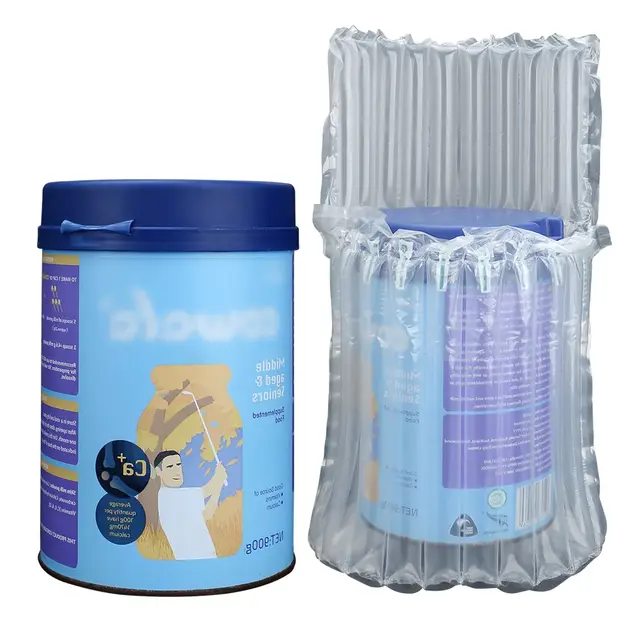
The first manufacturing stage is film extrusion, where raw polyethylene pellets are melted and shaped into thin, continuous sheets. These sheets undergo blown film extrusion, a process that stretches the material into large rolls while maintaining uniform thickness.
Once PE films are prepared, they are laminated with nylon film using heat and adhesives. This lamination process is crucial because it combines the strength of two materials without compromising flexibility. The end result is a composite film with high barrier properties that can retain air for long periods.
The thickness of the laminated film directly influences product performance. For example:
| Film Thickness | Application | Advantages |
|---|---|---|
| 50–60 microns | Small, lightweight items | Flexible, cost-effective |
| 70–80 microns | Medium packages | Balance between protection and weight |
| 90+ microns | Heavy-duty packaging | Maximum durability, strong air retention |
Once the laminated film is ready, manufacturers use precision machinery to design the air columns. Each roll consists of a series of connected chambers that inflate independently. This design ensures that even if one column is punctured, the others remain inflated to protect the product.
The design process involves:
Column size optimization – Small chambers offer flexibility, while large chambers provide heavy-duty protection.
Valve positioning – One-way valves are embedded to allow quick inflation and prevent backflow.
Cutting and sealing patterns – Automated machines create micro-seals to separate chambers without compromising the roll’s integrity.
The modular design is a key reason air column roll is preferred over traditional bubble wrap. It maximizes protection with less material waste and improves packing efficiency for businesses.
Heat sealing is the critical step that transforms laminated film into a functional air column roll. High-precision sealing machines apply controlled heat and pressure along predetermined patterns. This creates airtight chambers that will later be inflated.
At this stage, valve integration occurs. Small one-way valves are inserted into the film structure, allowing rapid air inflation. The valves are designed with micro-channels that close automatically after filling, preventing leaks.
The sealing process requires strict temperature and pressure controls to avoid weak joints. If the heat is too low, seals will not bond properly; if too high, the material may deform. Proper sealing ensures long-term air retention, which is the defining feature of high-quality air column roll.
Although air column roll is supplied in an uninflated form, manufacturers test every batch for durability before shipping. After sealing, sample rolls undergo inflation testing to confirm air tightness.
The testing process includes:
Inflation pressure test – Rolls are filled with air to the recommended PSI level to check for leaks.
Drop test – Inflated rolls with products inside are dropped from varying heights to simulate shipping conditions.
Puncture resistance test – Sharp objects are applied to evaluate the durability of the film.
These procedures ensure that each roll meets industry standards for protective packaging. Only rolls that pass rigorous quality checks are distributed to businesses worldwide.
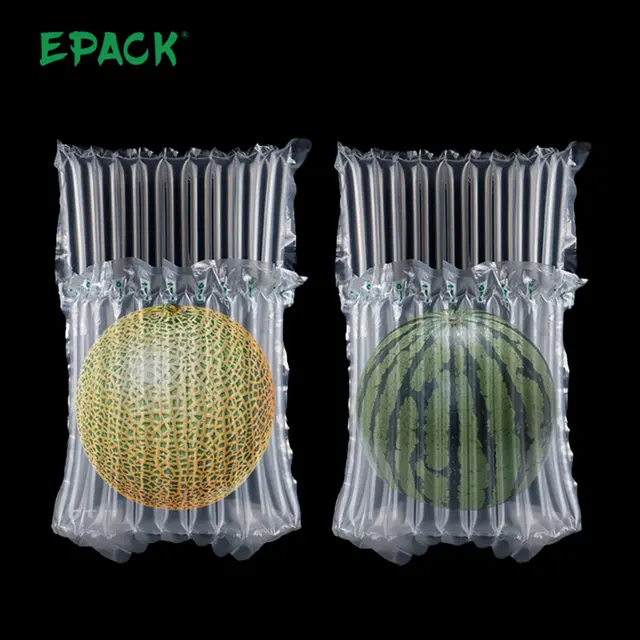
Modern air column roll manufacturing relies heavily on automation to maintain consistency and efficiency. Automated machines handle lamination, sealing, cutting, and valve integration, reducing human error.
Advantages of automation include:
High-speed production – Machines can produce thousands of meters of roll per hour.
Consistency – Uniform thickness and seal strength across all rolls.
Cost-effectiveness – Lower labor costs and reduced material waste.
Factories often integrate inline quality inspection systems that use sensors to detect leaks or weak seals instantly. This ensures defective rolls are identified early in the process.
As packaging waste becomes a global concern, manufacturers are innovating greener production methods for air column rolls. Some approaches include:
Recyclable films – Using 100% PE materials that can be recycled.
Reduced thickness – Optimizing strength while using less plastic.
Energy-efficient production lines – Machines with lower energy consumption.
Certain manufacturers also invest in biodegradable films that decompose faster than traditional plastics. While still in early development, these eco-friendly alternatives represent the future of protective packaging.
Once air column rolls pass testing, they are wound into compact rolls for shipment. Because they are shipped un-inflated, they take up minimal space in warehouses and transport vehicles, significantly reducing logistics costs.
During distribution, rolls are labeled with film thickness, column design, and usage guidelines. Customers then inflate them on-site using air pumps or automated inflators. This decentralized inflation model is one of the reasons air column roll is cost-efficient and highly scalable for businesses.
The making of air column roll involves a carefully engineered process that blends material science, precision sealing, and rigorous testing. From film extrusion to valve integration, each stage ensures that the final product delivers maximum protection with minimal material usage. Its lightweight design, durability, and sustainability options make it a superior packaging solution compared to traditional materials. Understanding how air column roll is made not only reveals why it is so effective but also highlights the technological advancements shaping the future of protective packaging.
1. What materials are used in air column roll?
Air column roll is typically made from laminated polyethylene (PE) and nylon, providing both durability and flexibility.
2. How do the air columns prevent leakage?
Each column is independently sealed with one-way valves, so even if one chamber is punctured, others remain inflated.
3. Can air column roll be recycled?
Yes, most standard PE-based air column rolls are recyclable. Some manufacturers also offer biodegradable options.
4. Why is air column roll shipped uninflated?
Shipping rolls uninflated saves space, reduces logistics costs, and allows businesses to inflate them only when needed.
5. What makes air column roll better than bubble wrap?
Unlike bubble wrap, air column roll has stronger, longer-lasting chambers, better product fit, and higher air retention, resulting in superior protection.


